Native Plants
Q. Who is Mr. Smarty Plants?
A: There are those who suspect Wildflower Center volunteers are the culpable and capable culprits. Yet, others think staff members play some, albeit small, role. You can torture us with your plant questions, but we will never reveal the Green Guru's secret identity.
Did you know you can access the Native Plant Information Network with your web-enabled smartphone?

Ask Mr. Smarty Plants
Ask Mr. Smarty Plants is a free service provided by the staff and volunteers at the Lady Bird Johnson Wildflower Center.

rate this answer

Sunday - January 10, 2010
From: McCaysville, GA
Region: Southeast
Topic: Edible Plants
Title: Edible Plants for North Georgia
Answered by: Dean Garrett
QUESTION:
We are planning a forest food garden in the hollers of the N GA Mountains. Which edible fruit, nut, berry, herb and creepers would be best for this reddish, clay-like soil? The food garden is in a meadow sloping down to a big flat area from a pine/maple/oak forest backing. Is there a database search for edible plants by state? If so, sorry, please point us to it. - Feed the Future Food Forest Gardens across the planetANSWER:
A forest food garden sounds wonderful, especially in your mountainous area. We don't have a database that identifies edible plants by state, and I couldn't find one online with a quick search, so I relied on books for the most part: Charles Hudson's The Southeastern Indians, Daniel Moerman's Native American Ethnobotany, and Sally and Andy Wasowski's Gardening With Native Plants of the South, cross-checking relevant plants against the USDA Plants database to determine if they occur in your location.
The plants listed below grow wild either in your county or in neighboring counties. Some do best in sun; some do best in part shade.
Keep in mind that the Lady Bird Johnson Wildflower Center focuses only on wild-growing native plants, few of which have been bred for culinary purposes, so if you're interested in more familiar food garden plants, you might want to consult local growers.
Edible Fruits:
- Eastern Persimmon (Diospyros virginiana) – a medium-sized tree with fall fruit
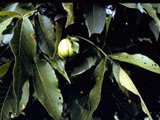
- Pawpaw (Asimina triloba) – a shrub or small tree with early fall fruit
- Muscadine Grape (Vitis rotundifolia) – a wild grapevine with famously delicious, late summer to fall grapes
- American Plum (Prunus americana) - a rather tart wild plum tree, fruiting late summer to fall
- Black Cherry (Prunus serotina) – a small, sharp, summer cherry on a beautiful, large tree
- Maypop or Purple Passionflower (Passiflora incarnata) – delicious, early fall passionfruit from this vine
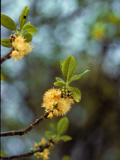
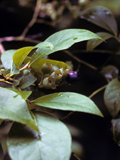
- Blackhaw Viburnum (Viburnum prunifolium) - small, raisin-like fall fruits on a small tree
Edible Nuts:
- Chinquapin (Castanea pumila) – a large shrub with fall nuts
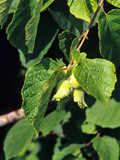
- American Hazelnut (Corylus americana) – a large shrub with early fall nuts
- Pecan (Carya illinoinensis) – a large tree with fall nuts
- Shagbark Hickory (Carya ovata) – a large tree with fall nuts
- Butternut (Juglans cinerea) – a large tree with fall nuts
- Eastern Black Walnut (Juglans nigra) – a large tree with fall nuts
Edible Berries:
- Highbush Blueberry (Vaccinium corymbosum) – a shrub with late fall fruit
- Virginia Strawberry (Fragaria virginiana) – a trailing plant with small, tart strawberries in summer
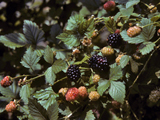
- Sawtooth Blackberry (Rubus argutus) – a trailing plant with summer fruit
- Southern Dewberry (Rubus trivialis) – a trailing plant with summer fruit
- Red Mulberry (Morus rubra) - a small tree with summer fruit
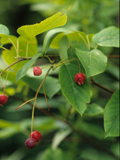
- Allegheny Serviceberry (Amelanchier laevis) – a small tree with early summer fruit
Herbs For Seasoning and Teas:
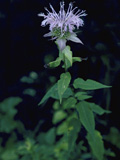
- White Bergamot (Monarda clinopodia) – shin-high perennial with minty leaves
- Scarlet Beebalm (Monarda didyma) - shin-high perennial with minty leaves
- Common Sweetleaf (Symplocos tinctoria) – small tree with fragrant leaves for seasoning
- Meadow Garlic (Allium canadense) – stalks used like chives
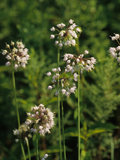
- Nodding Onion (Allium cernuum) – stalks used like chives
- Spicebush (Lindera benzoin) – shrub or small tree with twigs and leaves used in teas
- Narrowleaf Mountain Mint (Pycnanthemum tenuifolium) – knee-high perennial with fragrant leaves for teas and seasoning
Edible Roots:
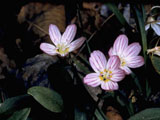
- Carolina Spring Beauty (Claytonia caroliniana) – edible root on small flower
- Groundnut (Apios americana) – vine with edible root if cooked
- Sunchoke/Jerusalem Artichoke (Helianthus tuberosus) – edible root of a sunflower
- Wild Sweet Potato (Ipomoea pandurata) – edible root of a morning glory
- Sassafras (Sassafras albidum) – shrub or small tree; bark of root used for flavoring
- Canadian Wild Ginger (Asarum canadense) – ankle-high forest herb; root used for flavoring
More Edible Plants Questions
Edible plants in Lycoming County, Pennsylvania
March 02, 2014 - Hi again! Thanks for answering my one question. I have another though. Do you know of any edible plants with no nasty side effects ( like stomach aches or being nauseous) that grow in Lycoming County ...
view the full question and answer
Problems with non-native tomatoes from Spokane WA
August 18, 2012 - I have 2 tomato plants in 1 whiskey barrel, they are in abundance with tomatoes. My problem is when the tomatoes start to ripen, half green & half light red within 1 day the tomatoes are really soft ...
view the full question and answer
Fruit crops to grow in Tennessee mountains
May 27, 2013 - My property has a lot of rock formations throughout it and has hundreds of cedars where it is not pasture. I am wanting to grow fruit trees and berry bushes but don't know what can grow in this e...
view the full question and answer
Identification of a cucumber-like vine with fruit
November 16, 2011 - We found tiny, grape-size white melon-like fruit on a vine, with tomato-like/cucumber-like seeds. The leaves on the vine were similar to grape or cucumber leaves, but not spiny. They were behind our...
view the full question and answer
Dog eats horse herb (Calyptocarpus vialis)
July 14, 2008 - This is not a question but in response to one of your answers.
My dog eats horse herb all the time. He seems to use it to calm his stomach or throat from acid indigestion. He had an ulcer and would...
view the full question and answer
| Support the Wildflower Center by Donating Online or Becoming a Member today. |