Native Plants

Q. Who is Mr. Smarty Plants?
A: There are those who suspect Wildflower Center volunteers are the culpable and capable culprits. Yet, others think staff members play some, albeit small, role. You can torture us with your plant questions, but we will never reveal the Green Guru's secret identity.
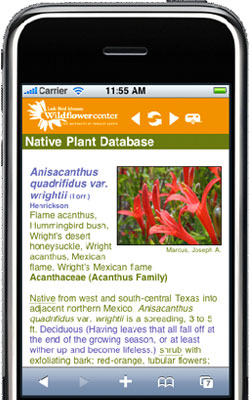
Did you know you can access the Native Plant Information Network with your web-enabled smartphone?

Ask Mr. Smarty Plants
Ask Mr. Smarty Plants is a free service provided by the staff and volunteers at the Lady Bird Johnson Wildflower Center.

rate this answer

Monday - May 21, 2012
From: Syracuse, NY
Region: Northeast
Topic: Wildlife Gardens, Erosion Control, Shrubs
Title: Shrubs and small trees for a slope in NY
Answered by: Anne Bossart
QUESTION:
We are looking for a living wall made of shrubs / small trees - no more than 25' for the top of a steep creek bed. We are looking for the best erosion preventing types.ANSWER:
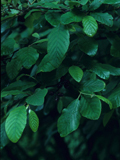
Generally speaking, plants with fibrous root systems or those that spread using stolons , such as Alnus serrulata (Hazel alder) are the best for holding a bank and resisting erosion.
Although you do not indicate anything about your conditions (light exposure and soild moisture) you can search our Native Plant database for likely candidates using the Combination Search function. If you select: New York, shrubs, both the 6-12 ft and 12-36 ft sizes and then select your specific conditions, the database will generate a list of plants that occur in your area that meet those criteria. Each plant on the list is linked to a detailed information page with images that will give you the information you need, even though you cannot sort specifically for "erosion preventing shrubs less than 25 ft in height". For instance, the entry for the alder calls it "A multiple-trunked, suckering shrub, 12-20 ft. tall, with a picturesque habit and shiny gray-brown bark. Summer foliage is dark green and glossy, becoming yellow, tinged with red, in fall." It is adapted to all light conditions, so as long as your site is moist enough, it would be a good choice. Look for terms like "suckering, thicket-forming, or colony-forming" in the descriptions.
Some other plants to consider are:
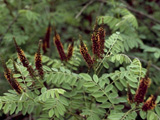
Amorpha fruticosa (Indigo bush)
Calycanthus floridus (Eastern sweetshrub)
Cornus racemosa (Gray dogwood)
Sambucus nigra ssp. canadensis (Common elderberry)
By choosing a variety of native plants of differing sizes and forms you will create not just a living wall, but one that is attractive throughout the seasons and offers wildlife habitat, bringing your property to life with songbirds and butterflies.
From the Image Gallery

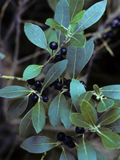
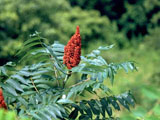
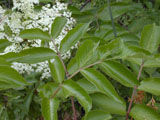
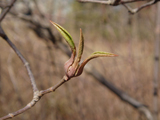
More Erosion Control Questions
Erosion control in Charleston WV
August 26, 2009 - I live in Charleston, WV and just purchased a home that has a hill side out back that has some erosion occurring. I was wondering what would be the best ground cover to plant in my area to control the...
view the full question and answer
Plant for Erosion Control on Wooded Slope in MD
May 19, 2015 - We are looking for a plant to help with erosion control on a wooded slope next to our drive. The roots of several of the trees are exposed like a shelf, so I think it's a fairly severe problem. We ar...
view the full question and answer
Plants to stop erosion on creek side
July 05, 2011 - I need plants for a westside slope to a creek that will help with erosion, need fast growing and likes lots of sun. Thank you,
Mr. Smarty Plants
view the full question and answer
Chesapeake Bay Erosion Control from White Stone VA
January 14, 2012 - Native Wetland Plants for Chesapeake Bay Erosion Control -- I have a wooded lot (pine and hardwoods)leading to 4-5 ft. wide flat shoreline edged with riprap. What native wetland plants survive salt wa...
view the full question and answer
Grass for erosion control
July 19, 2008 - I have a very shaded sloped back yard. I have not been able to get grass to grow due to the shade. There are approximately twenty 30-40 ft. Oaks in the yard. The yard slopes toward the house. I wo...
view the full question and answer
| Support the Wildflower Center by Donating Online or Becoming a Member today. |