Native Plants

Plant Database
Search for native plants by scientific name, common name or family. If you are not sure what you are looking for, try the Combination Search or our Recommended Species lists.
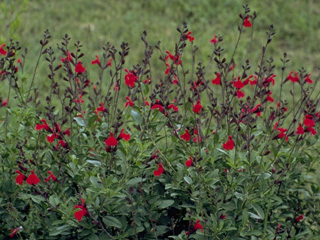
Dana, Michael
Salvia greggii
Salvia greggii A. Gray
Autumn Sage, Cherry Sage, Gregg Salvia
Lamiaceae (Mint Family)
Synonym(s):
USDA Symbol: sagr4
USDA Native Status: L48 (N)
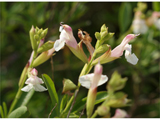
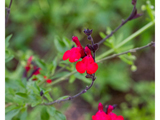
Autumn Sage is a soft, mounding shrub normally 2-3 ft. tall, with small, mintily aromatic green leaves that are evergreen in warmer climates. The flowers are borne on racemes from spring to frost and can be red, pink, purple, orange, or white. Its natural range is from south-central and west Texas south to San Luis Potosi in Mexico, mostly on rocky slopes.
A popular landscape plant in the Southwest, Autumn sage is delightful to use as a small, ornamental, flowering shrub in a perennial bed or as a low hedge. Its aromatic foliage quickens the senses and its flowers are sure to draw hummingbirds. The color of its blossoms in the wild is usually red but varies from area to area, with some regions dominated by red-blooming plants, others pink, others orange, others purple, and others white, plus many shades in between. The color range has been further enhanced by breeding, resulting in many cultivars over the years. It is disease and insect free and drought tolerant, and once established, should not be fertilized.
The species name “greggii” is in honor of Josiah Gregg, (1806-1850). He was born in Overton County, Tennessee. In the summer of 1841 and again in the winter of 1841-42 he traveled through Texas, up the Red River valley, and later from Galveston to Austin and by way of Nacogdoches to Arkansas. He took note of Texas geology, trees, prevalent attitudes, and politics. At the same time, Gregg began compiling his travel notes into a readable manuscript. His “Commerce of the Prairies”, which came out in two volumes in 1844, was an immediate success. In 1848 he joined a botanical expedition to western Mexico and California, during which he corresponded with and sent specimens to the eminent botanist George Engelman in St. Louis. Subsequently, the American Botanical Society added the Latin name “greggii” in his honor to twenty-three species of plants. Gregg died on February 25, 1850, as a result of a fall from his horse.
Plant Characteristics
Duration: PerennialHabit: Shrub
Leaf Retention: Evergreen , Semi-evergreen
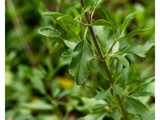
Leaf Arrangement: Opposite
Leaf Complexity: Simple
Leaf Shape: Elliptic , Obovate
Leaf Pubescence: Glabrous
Leaf Margin: Entire , Serrulate
Leaf Apex: Obtuse
Leaf Texture: Smooth
Breeding System: Flowers Unisexual , Monoecious
Inflorescence: Raceme
Size Notes: Normally 2-3 ft but can reach 5 ft
Leaf: Leaf margins may be entire, serrulate or minutely serrulate.
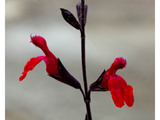
Flower: Flowers 1 inch long
Fruit: Nutlets.
Bloom Information
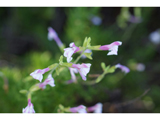
Bloom Color: White , Red , Pink , Orange , PurpleBloom Time: Mar , Apr , May , Jun , Jul , Aug , Sep , Oct , Nov
Bloom Notes: Depending on provenance, will bloom most heavily either in spring or in fall, with scattered blooming in summer and until frost. Flower color differs according to provenance and breeding, ranging from red to orange to pink to purple to white, with many shades in between.
Distribution
USA: TXNative Distribution: Central and west Texas south to San Luis Potosi in Mexico
Native Habitat: Well-drained, rocky slopes. Usually in rocky soils in central, south, and west Texas.
Growing Conditions
Water Use: LowLight Requirement: Sun
Soil Moisture: Dry
Drought Tolerance: High
Cold Tolerant: yes
Heat Tolerant: yes
Soil Description: Well-drained, rocky soils, usually limestone of greater or lesser organic content. Also in sands and loams.
Conditions Comments: Autumn sage must have a well-drained site and cannot take shrink-swell clay soils. In clay soils, work in organic matter and amendments to improve drainage and, if possible, plant on a slope. Though generally cold tolerant, will be deciduous in regions with extremely cold winters, though some cultivars do well even in Oklahoma and Colorado, well outside of its natural range. Avoid planting it near heavy foot traffic because the stems are very brittle.
Benefit
Use Ornamental: Valued for its nearly evergreen habit, its colorful, long-lasting, hummingbird-attracting blooms, and the denseness of its growth, which makes it useful as a low hedge.Use Wildlife: Flowers attract bees and hummingbirds.
Use Food: As with many Salvia species, leaves can be used fresh or dried for seasonings and teas, and the flowers are edible.
Conspicuous Flowers: yes
Fragrant Flowers: yes
Fragrant Foliage: yes
Attracts: Butterflies , Hummingbirds
Nectar Source: yes
Deer Resistant: High
Propagation
Propagation Material: Seeds , Semi-hardwood Cuttings , Softwood CuttingsDescription: Most easily grown from softwood or semi-hardwood tip cuttings. Application of a rooting hormone improves rooting. Rooting should occur in three weeks. Also propagated by root layering or from fresh, untreated seed sown in fall or winter.
Seed Collection: Collect the seeds as the capsules begin to dry but before they have dropped the seeds.
Seed Treatment: Spread seeds in thin layers to dry a few days before storing in sealed, refrigerated containers.
Commercially Avail: yes
Maintenance: Trim or pinch tips continuously for nonstop blooming. In early spring, you may wish to prune it a third to halfway back to produce thicker, more compact foliage and a shorter flowering plant. Pruning may delay flowering for several weeks, but it is important if you want to prevent leggy plants. On the other hand, if you want to encourage the plant to assume its maximum natural shape, however tall, only pick-prune.
Mr. Smarty Plants says
Edible Native Plants for a Small Austin Garden
March 15, 2010
Hello Mr. Smarty Plants (or Mrs. or Miss, whomever is answering this go'round)!
First off, thank you so much for all the help you have given me in the past. Secondly, the company my husband works ...
view the full question and answer
Edible plants native to Austin, TX
August 05, 2009
Hello,
I am a chef from Buenos Aires Argentina visiting Austin, Texas and would like to learn about native, edible plants in the region.
Please let me know if there are any native, edible plants...
view the full question and answer
Deer resistant, sun tolerant plants for landscaping
April 19, 2007
I live in Driftwood and am looking for flowering, deer-resistant plants for the northern side of my house; however the house turn just enough to the west that the flowerbed receives about 3 hours of a...
view the full question and answer
From the National Organizations Directory
According to the species list provided by Affiliate Organizations, this plant is on display at the following locations:Naval Air Station Kingsville - Kingsville, TX
Lady Bird Johnson Wildflower Center - Austin, TX
Texas Discovery Gardens - Dallas, TX
Sibley Nature Center - Midland, TX
Texas Parks and Wildlife Department - Austin, TX
NPSOT - Fredericksburg Chapter - Fredericksburg, TX
NPSOT - Austin Chapter - Austin, TX
NPSOT - Williamson County Chapter - Georgetown, TX
Bibliography
Bibref 481 - How to Grow Native Plants of Texas and the Southwest: Revised and Updated Edition (2001) Nokes, J.Bibref 293 - Manual of the Vascular Plants of Texas (1979) Correll, D. S. & M. C. Johnston
Bibref 841 - Native Alternatives to Invasive Plants (2006) Burrell, C. C.
Bibref 995 - Native Landscaping from El Paso to L.A. (2000) Wasowski, S. and A. Wasowski
Bibref 318 - Native Texas Plants: Landscaping Region by Region (2002) Wasowski, S. & A. Wasowski
Search More Titles in Bibliography
Web Reference
Webref 23 - Southwest Environmental Information Network (2009) SEINet - Arizona ChapterFrom the Archive
Wildflower Newsletter 1992 VOL. 9, NO.5 - Ten Year Anniversary Celebration, A Look Back at Our First Decade, Celebration o...Wildflower Newsletter 1996 VOL. 13, NO.3 - Hummingbird Gardening, Blooms Beget Butterflies, Butterflies and Hummingbirds Fo...
Additional resources
USDA: Find Salvia greggii in USDA PlantsFNA: Find Salvia greggii in the Flora of North America (if available)
Google: Search Google for Salvia greggii
Metadata
Record Modified: 2023-04-07Research By: TWC Staff, GDG