Native Plants

Plant Database
Search for native plants by scientific name, common name or family. If you are not sure what you are looking for, try the Combination Search or our Recommended Species lists.
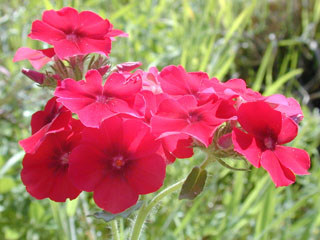
Marcus, Joseph A.
Phlox drummondii
Phlox drummondii Hook.
Annual Phlox, Drummond Phlox, Pride-of-Texas, Texas Pride
Polemoniaceae (Phlox Family)
Synonym(s):
USDA Symbol: phdr
USDA Native Status: L48 (N), CAN (I)
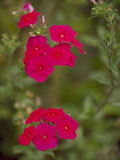
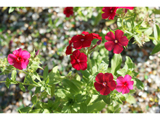
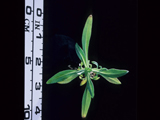
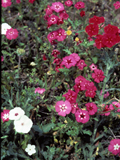
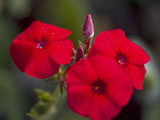
A much-branched, sticky-glandular plant with bright rose-red, pink, or white flowers in tight clusters at the ends of stems. Annual phlox or Drummonds Phlox is a showy annual. Usually 6-12 in. tall, this phlox can reach 20 in. in height. Its flowers, usually with a pale center, range in color from pink to red, white, peach, or lavender. The 1 in. blooms are in terminal clusters and are trumpet-shaped with a short, narrow tube. The leaves are soft, hairy and sticky. This southern flower of roadsides and fields escaped from cultivation. The species is named for Thomas Drummond, who sent seeds from Texas to England in 1835.
It is not commonly known that one of Texas’ most beautiful wildflowers has been prized in Europe as an “exotic” cultivated garden flower for nearly 150 years. In 1835, botanist Thomas Drummond collected the seeds of this annual wildflower in an area where a red-colored variety overlapped with a pink-flowered form. This collection of wild seed was sent first to Great Britain and later was distributed to nurserymen in several European countries. About 200 true breeding strains were developed from this single collection of seed, including red, pink, white, lavender, maroon, coral, pale pink, and the mixtures of these colors, with the central “eye” of the flower differing in color from the outer color of the petals.
The species name of this plant is named for Thomas Drummond, (ca. 1790-1835), naturalist, born in Scotland, around 1790. In 1830 he made a trip to America to collect specimens from the western and southern United States. In March, 1833, he arrived at Velasco, Texas to begin his collecting work in that area. He spent twenty-one months working the area between Galveston Island and the Edwards Plateau, especially along the Brazos, Colorado, and Guadalupe rivers. His collections were the first made in Texas that were extensively distributed among the museums and scientific institutions of the world. He collected 750 species of plants and 150 specimens of birds. Drummond had hoped to make a complete botanical survey of Texas, but he died in Havana, Cuba, in 1835, while making a collecting tour of that island.
Bloom Information
Bloom Color: White , Red , Pink , PurpleBloom Time: Mar , Apr , May , Jun
Distribution
USA: AL , AR , CT , FL , GA , LA , MD , MI , MN , MO , MS , NC , OK , SC , TN , TX , VA , VTNative Distribution: Native to TX; introduced in s.e. U.S.
Native Habitat: In grasslands and open woodlands in neutral to moderately acid sandy soils. In east and central Texas, rare north and west to the Llano Basin. Well-drained sand; acid to neutral.
Growing Conditions
Water Use: LowLight Requirement: Sun , Part Shade
Soil Moisture: Dry
Soil pH: Acidic (pH<6.8) , Circumneutral (pH 6.8-7.2)
Soil Description: Although it prefers sandy, fertile soil, it can be established in a variety of well-drained soils, including alkaline substrates.
Conditions Comments: A much-branched, sticky-glandular plant with bright rose-red, pink, or white flowers in tight clusters at the ends of stems. Drummond's phlox is a showy annual. Its flowers, usually with a pale center, range in color from pink to red, white, peach, or lavender. The 1 in. blooms are in terminal clusters and are trumpet-shaped with a short, narrow tube. The leaves are soft, hairy and sticky. It prefers an acidic to neutral sandy soil.
Benefit
Use Ornamental: Shortgrass meadow, Pocket prairie, Wildflower meadow, GardenConspicuous Flowers: yes
Attracts: Butterflies
Nectar Source: yes
Deer Resistant: No
Propagation
Description: Seed is available from United States companies, but essentially all of it comes from European sources, and includes a full range of color, from white to deep red. Plant seed in the fall at the suggested rate of 10 pounds/acre. After distributing the seed evenly, rake into loosened topsoil to ensure good seed/soil contact. Seeding rate is 10 pounds/acre. The approximate seed count is 234,000 seeds/pound.Seed Collection: Capsules explosively dehisce releasing their seeds. Collect seeds from capsules that have turned from green to a light tan color just prior to dehiscence.
Seed Treatment: Seeds require no pretreatment, but germination of freshly harvested seeds may be enhanced by the addition of gibberillic acid.
Commercially Avail: yes
Maintenance: Provide fall, winter, and spring watering if the seasonal rains are sparse. The plant dies back after going to seed, so it is suggested you plant with summer and/or fall-blooming wildflowers. As with all annuals, it is essential that phlox is allowed to reseed for an abundant display the following year.
Find Seed or Plants
Order seed of this species from Native American Seed and help support the Wildflower Center.
Find seed sources for this species at the Native Seed Network.
Mr. Smarty Plants says
Native plants for container gardens in Central Texas
March 11, 2008
Dear Mr. Smarty Plants: I moved to TX last year, for now living in an apartment with a good-size but shady deck; my garden in VA was full of VA native plants. What TX natives, if any, can I grow in ...
view the full question and answer
From the National Organizations Directory
According to the species list provided by Affiliate Organizations, this plant is on display at the following locations:Naval Air Station Kingsville - Kingsville, TX
Fredericksburg Nature Center - Fredericksburg, TX
Lady Bird Johnson Wildflower Center - Austin, TX
Sibley Nature Center - Midland, TX
Brackenridge Field Laboratory - Austin, TX
NPSOT - Native Plant Society of Texas - Fredericksburg, TX
Stengl Biological Research Station - Smithville, TX
Native Seed Network - Corvallis, OR
NPSOT - Williamson County Chapter - Georgetown, TX
Bibliography
Bibref 766 - Dale Groom's Texas Gardening Guide (2002) Groom, D.Bibref 355 - Landscaping with Native Plants of Texas and the Southwest (1991) Miller, G. O.
Bibref 765 - McMillen's Texas Gardening: Wildflowers (1998) Howard, D.
Bibref 318 - Native Texas Plants: Landscaping Region by Region (2002) Wasowski, S. & A. Wasowski
Bibref 248 - Texas Wildflowers: A Field Guide (1984) Loughmiller, C. & L. Loughmiller
Search More Titles in Bibliography
Web Reference
Webref 57 - Atlas of Florida Plants (2020) Institute for Systematic BotanyWebref 23 - Southwest Environmental Information Network (2009) SEINet - Arizona Chapter
Research Literature
Reslit 215 - The Role of Light During Phlox drummondii Hook Seed Germination (1993) W. J. Carpenter, E. R. Ostmark and J. A. CornellReslit 216 - Temperature and Seed Moisture Govern Storage Duration and Germination of Phlox drummondii (1993) W. J. Carpenter, E. R. Ostmark and J. A. Cornell
Reslit 735 - Fitness consequences and heritability aspects of emergence date in Phlox drummondii (1997) M. G. Kelly and D. A. Levin
Reslit 816 - Rapid response to artificial selection on flower size in Phlox (2003) G. Lendvai and D. A. Levin
Reslit 825 - Effect of inbreeding on autogamy in Phlox (1995) D. A. Levin
Reslit 1134 - Efficient protocol for in vitro production of androgenic haploids of Phlox drummondii (2008) A. Razdan, M. K. Razdan, M. V. Rajam and S. N. Rai...
Reslit 1190 - Mating system and the hybridization between self-compatible Phlox cuspidata and self-incompatible Phlox drummondii (2009) L. G. Ruane
Reslit 1192 - Pollen competition and environmental effects on hybridization dynamics between Phlox drummondii and Phlox cuspidata (2008) L. G. Ruane and K. Donohue
Reslit 1235 - Lost in Phenotypic Space: Environment-Dependent Morphology in Phlox drummondii (Polemoniaceae) (1995) C. D. Schlichting and M. Pigliucci
Reslit 1252 - Quantitative Genetics of Fitness Traits in a Wild Population of Phlox (1991) K. E. Schwaegerle and D. A. Levin
This information was provided by the Florida WIldflower Foundation.
Search More Titles in Research Literature
From the Archive
Wildflower Newsletter 1984 VOL. 1, NO.2 - Lady Bird Finds Wildflower Lovers Everywhere, Center Expands With New Building, ...Wildflower Newsletter 1986 VOL. 3, NO.4 - Fall Highlights Busy Season at the Center, Wildflower Days Welcome the Holidays,...
Wildflower Newsletter 1987 VOL. 4, NO.4 - Wildflower Center Sows Seeds for the Country, Hotline for Texas, New Goals Plans...
Additional resources
USDA: Find Phlox drummondii in USDA PlantsFNA: Find Phlox drummondii in the Flora of North America (if available)
Google: Search Google for Phlox drummondii
Metadata
Record Modified: 2023-04-27Research By: TWC Staff