Native Plants

Plant Database
Search for native plants by scientific name, common name or family. If you are not sure what you are looking for, try the Combination Search or our Recommended Species lists.
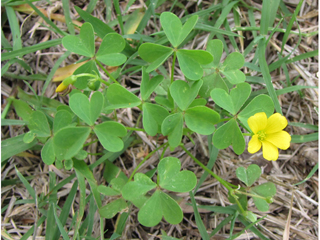
Lynn, Janice
Oxalis stricta
Oxalis stricta L.
Common Yellow Oxalis, Yellow Wood-sorrel, Upright Yellow Wood-sorrel, Yellow Woodsorrel
Oxalidaceae (Wood-Sorrel Family)
Synonym(s): Ceratoxalis coloradensis, Ceratoxalis cymosa, Oxalis bushii, Oxalis coloradensis, Oxalis cymosa, Oxalis europaea, Oxalis europaea var. bushii, Oxalis europaea var. rufa, Oxalis fontana, Oxalis fontana var. bushii, Oxalis interior, Oxalis rufa, Oxalis stricta var. decumbens, Oxalis stricta var. piletocarpa, Oxalis stricta var. rufa, Oxalis stricta var. villicaulis, Xanthoxalis bushii, Xanthoxalis coloradensis, Xanthoxalis cymosa, Xanthoxalis dillenii var. piletocarpa, Xanthoxalis interior, Xanthoxalis rufa, Xanthoxalis stricta, Xanthoxalis stricta var. piletocarpa
USDA Symbol: OXST
USDA Native Status: L48 (N), CAN (I)
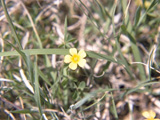
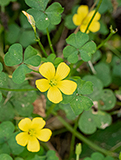
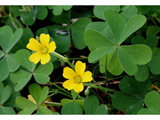
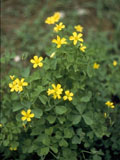
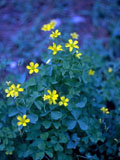
A low spreading plant with clover-like, sour-tasting leaves and 1 to several yellow flowers.
With their clover-like leaves, the wood sorrels are easy to recognize. The sour taste of the leaves is distinctive and they may be used in salads, but sparingly, because of the oxalic acid content. The genus name comes from the Greek oxys ("sour"). This species is a cosmopolitan weed, perhaps originally native to North America. It is especially common as a garden weed. The very similar Slender Yellow Wood Sorrel (O. dillenii), has seed capsules on reflexed stalks. Large Yellow Wood Sorrel (O. grandis) has flowers to 1" (2.5 cm) wide and leaves often with purple edges; it is native and grows from Indiana east to Pennsylvania and south to Georgia and Louisiana.
Plant Characteristics
Duration: PerennialHabit: Herb
Leaf Arrangement: Alternate
Fruit Type: Capsule
Size Notes: Stems erect to decumbent, up to about 3 feet long.
Bloom Information
Bloom Color: YellowBloom Time: Mar , Apr , May , Jun , Jul , Aug , Sep , Oct
Distribution
USA: AL , AR , AZ , CO , CT , DC , DE , FL , GA , IA , ID , IL , IN , KS , KY , LA , MA , MD , ME , MI , MN , MO , MS , MT , NC , ND , NE , NH , NJ , NM , NY , OH , OK , PA , RI , SC , SD , TN , TX , UT , VA , VT , WA , WI , WV , WYCanada: NB , NS , ON , PE
Native Distribution: Saskatchewan east to Newfoundland, south to Florida, west to Texas, and north to Minnesota; also in West.
Native Habitat: Prairie, Plains, Meadows, Pastures, Savannas, Woodlands' edge, Opening, Throughout
Growing Conditions
Water Use: LowLight Requirement: Sun
Soil Moisture: Dry
Soil pH: Circumneutral (pH 6.8-7.2)
Soil Description: All soils
Conditions Comments: This low plant is extremely common and has wide distribution in Texas. Seeds out freely and is probably best used in wild areas.
Benefit
Use Food: EDIBLE PARTS: Small amounts of leaves, flowers, seeds, tubers/roots eaten raw are not dangerous. Gather stems and leaves during early spring through fall. Tender stems and leaves can be steeped in hot water. Use liquid as a sour lemonade-type drink. For tea, use a handful of leaves per pint of water. Add to salads for a lemony taste. Cook with greens to enhance mild flavors. Remove stems if too stringy. Use flowers raw in salads or as cooked greens. Add young seed pods to salads or cook with the leaves and stems. Clean tubers and roots and eat raw or cooked with the greens, seeds, and flowers. (Poisonous Plants of N.C.)Warning: POISONOUS PARTS: All parts. Low toxicity if ingested (no documented cases in humans). Symptoms in grazing animals, when eaten in large quantities, may cause trembling, cramps, and staggering as in grazing animals. Toxic Principle: Soluble oxalate.
Deer Resistant: High
Mr. Smarty Plants says
Edible Native Plants for a Small Austin Garden
March 15, 2010
Hello Mr. Smarty Plants (or Mrs. or Miss, whomever is answering this go'round)!
First off, thank you so much for all the help you have given me in the past. Secondly, the company my husband works ...
view the full question and answer
National Wetland Indicator Status
| Region: | AGCP | AK | AW | CB | EMP | GP | HI | MW | NCNE | WMVE |
| Status: | UPL | FACU | FACU | FACU | FACU | FACU | FACU |
From the National Organizations Directory
According to the species list provided by Affiliate Organizations, this plant is on display at the following locations:Lady Bird Johnson Wildflower Center - Austin, TX
Crosby Arboretum - Picayune, MS
Bibliography
Bibref 248 - Texas Wildflowers: A Field Guide (1984) Loughmiller, C. & L. LoughmillerBibref 328 - Wildflowers of Texas (2003) Ajilvsgi, Geyata.
Bibref 286 - Wildflowers of the Texas Hill Country (1989) Enquist, M.
Search More Titles in Bibliography
Web Reference
Webref 38 - Flora of North America (2019) Missouri Botanical Garden, St. Louis, MO & Harvard University Herbaria, Cambridge, MA.Webref 23 - Southwest Environmental Information Network (2009) SEINet - Arizona Chapter
Additional resources
USDA: Find Oxalis stricta in USDA PlantsFNA: Find Oxalis stricta in the Flora of North America (if available)
Google: Search Google for Oxalis stricta
Metadata
Record Modified: 2023-02-21Research By: NPC