Native Plants

Q. Who is Mr. Smarty Plants?
A: There are those who suspect Wildflower Center volunteers are the culpable and capable culprits. Yet, others think staff members play some, albeit small, role. You can torture us with your plant questions, but we will never reveal the Green Guru's secret identity.

Did you know you can access the Native Plant Information Network with your web-enabled smartphone?

Ask Mr. Smarty Plants
Ask Mr. Smarty Plants is a free service provided by the staff and volunteers at the Lady Bird Johnson Wildflower Center.

rate this answer

Wednesday - June 06, 2012
From: Rosanky, TX
Region: Southwest
Topic: Compost and Mulch, Planting, Trees
Title: Overwatering Texas Mountain Laurel from Rosanky TX
Answered by: Barbara Medford
QUESTION:
I just read your article in the Statesman about over watering Mt.Laurel. Now I know why my lovely 15 year old tree is dying. We put in new grass this winter and I watered too much. Is there any hope of it coming back even though the leaves are now completely brown? It died quickly, just about last week. Is there anything I can do to help the situation? I am so sad. Thanks for your help.ANSWER:
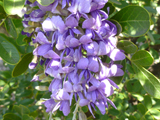
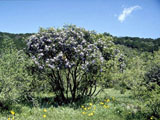
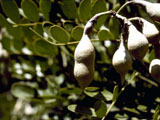
We would be surprised if a Sophora secundiflora (Texas mountain laurel) went down that easily just because of overwatering. If you follow the plant link above to our webpage on the plant, you will learn it needs very good drainage. It could be that something that happened 15 years ago, as in the initial planting of the plant, may be the culprit. First of all, rearrange your sprinkler system, if that is how you have been watering the grass, so that it does not hit the Mountain Laurel. If the plant was not put in a hole with dirt amended for drainage, such as the addition of compost, decomposed granite or sand to the native soil, the sudden addition of more water may be drowning the tree.
Next, determine if the tree is really dead, using the thumbnail test. Starting on a limb as high as you can reach, scratch a thin sliver of bark off with your thumbnail. If you find a thin layer of green beneath that bark, that limb, at least, is still alive. If there is no underlayer of green on the first limb, work your way down the tree. If you get clear to the base, close to the roots, without finding green, the tree is probably gone. While you are doing that, look around for caterpillars or webs, even wilted leaves, which could indicate an insect problem. If you find some green area, while other limbs do not have that green layer, start by pruning off those dead limbs. This will take some strain off the tree as a whole. Do not fertilize. It seems that gardeners sometimes think a good dose of fertilizer will cure anything, including lightning damage. Actually a tree under stress, which yours obviously is, should never be fertilized.
Now that you have discontinued the overhead watering (you have, haven't you?), water the tree by sticking a hose deep down in the dirt close to the roots and let the water dribble until water appears on the surface. Do this no more than once a week, less if we are getting regular rains (not likely!)
One more bandaid that you could put on the tree is to spread a good quality shredded hardwood mulch on the root area. About two to four inches is good, but not up against the trunk, where it could cause insect or fungal damage. This will protect the roots from heat or cold and, as it decomposes, improve the texture and drainage of the dirt.
From the Image Gallery
More Compost and Mulch Questions
Chlorosis in yaupon from San Angelo TX
April 08, 2012 - Thank you for your information on the yaupon holly. We just finished clearing out the mulch and the red ground cover that popped up. I will quit watering it as much as the rest of the plants. Our y...
view the full question and answer
Deer-resistant groundcover for New Braunfels, TX
September 24, 2011 - Could you recommend some deer resistant ground cover plants for the New Braunfels area? We have tried Ajuga and Katie's Ruellia and they have been eaten.
view the full question and answer
Black-eyed Susans in potting soil on ground
November 12, 2010 - I would like to know if black eyed susans can be planted in just potting soil instead of mixing it in with dirt from the ground? I don't want to leave it in the pots. I want to plant it, but the grou...
view the full question and answer
Shelf life of hawthorn leaves in Florissant, MO
April 30, 2009 - I have a bag of hawthorn leaves that were harvested in 2007. Do you know if they're still effective? How long is the shelf life of hawthorn leaves? Thank you for your assistance.
view the full question and answer
Limp leaves on Texas purple sage in Magnolia TX
July 22, 2010 - Recently planted Texas purple sage, some of it looks healthy and has new blooms, but a few of the plants have limp leaves and are thin at the bottom. I read the article on cotton root rot, but am not ...
view the full question and answer
| Support the Wildflower Center by Donating Online or Becoming a Member today. |