Native Plants

Q. Who is Mr. Smarty Plants?
A: There are those who suspect Wildflower Center volunteers are the culpable and capable culprits. Yet, others think staff members play some, albeit small, role. You can torture us with your plant questions, but we will never reveal the Green Guru's secret identity.
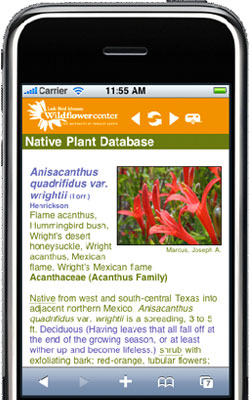
Did you know you can access the Native Plant Information Network with your web-enabled smartphone?

Ask Mr. Smarty Plants
Ask Mr. Smarty Plants is a free service provided by the staff and volunteers at the Lady Bird Johnson Wildflower Center.

rate this answer

Friday - November 12, 2010
From: New Iberia, LA
Region: Southeast
Topic: Compost and Mulch, Seeds and Seeding, Herbs/Forbs
Title: Black-eyed Susans in potting soil on ground
Answered by: Brigid & Larry Larson
QUESTION:
I would like to know if black eyed susans can be planted in just potting soil instead of mixing it in with dirt from the ground? I don't want to leave it in the pots. I want to plant it, but the ground is very hard, so I want to know if I can plant it above the ground in potting soil.ANSWER:
Yes, I see that your soil is one that the USDA calls "Level, poorly drained clayey soils' - so I bet it's hard to dig up. Good News - Rudbeckia hirta (Black-eyed susan) is a native to your area and will grow happily in moist to dry, well-drained soils. Yes, the plants can be grown in potting soil, but better alternatives are to grow them from seed, amend your soil, or build a raised bed.
The seeds will germinate nicely if you merely scratch up your regular soil and then just scatter the seeds on the ground making sure they make good contact with the earth. Black-eyed Susan is so adaptable that you really don't have to do much to help it along. Many of the Black-eyed Susans found in nurseries are hybrid, bred for their showy blossoms. The Lady Bird Johnson Wildflower Center recommends that you purchase seeds from a native seed source like Native American Seed. However, from the phrasing of your question, it sounds like you already have your plants in pots.
I would recommend that you amend your soil with some compost, before planting. That would loosen up the dirt and add nutrients to the soil. Black-eyed Susans are a very hardy perennial. Just be sure to plant them at the same soil level that they were grown in the pot. Another solution, which helps the drainage is to build raised beds, add compost, crushed decomposed granite, and plant your Black-eyed Susan and other flowers. They will love it!

Rudbeckia hirta var. pulcherrima
More Seeds and Seeding Questions
Propagation of Chandler's craglily from San Marcos TX
December 16, 2012 - Can you please advise me on collecting and propagating seed from Chandler’s craglily -Echeandia chandleri. I have 2 plants that came from the wildflower center. They never seem to multiply, but they d...
view the full question and answer
Wildflowers of April wedding in Liberty Hill TX
September 02, 2015 - We are planning a wedding for April 9 in Liberty Hill, TX (78642) and live on several acres. We would like to plant wildflowers on the land to use for bouquets and centerpieces. Could you please recom...
view the full question and answer
Native grass mix for Bastrop County, TX
February 25, 2014 - I plan to put in a small lawn on a tract of land near Rosanky, TX in Bastrop County. There are scattered oaks but the yard space will be mostly open. Soil is basically sandy. Is there a good native...
view the full question and answer
Dealing with rain runoff on a slope in Austin
March 24, 2012 - Our lawn is a year old and slopes at about a 45 degree angle with a lot of small holes and tiny gullies from water run-off. I have tried packing them with soil, but it washes away in the rain. Would ...
view the full question and answer
Lack of Fruit on Forestiera
March 17, 2013 - I have not been able to get berry production on my elbow bush. I have male and female plants. Is it possible to help with the pollination process? Thank you.
view the full question and answer
| Support the Wildflower Center by Donating Online or Becoming a Member today. |