Native Plants

Plant Database
Search for native plants by scientific name, common name or family. If you are not sure what you are looking for, try the Combination Search or our Recommended Species lists.
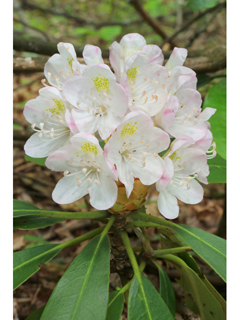
Cressler, Alan
Rhododendron maximum
Rhododendron maximum L.
Great Laurel, Wild Rhododendron, Rosebay Rhododendron, White Laurel, Rosebay
Ericaceae (Heath Family)
Synonym(s): Rhododendron ashleyi
USDA Symbol: rhma4
USDA Native Status: L48 (N), CAN (N)
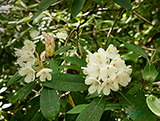
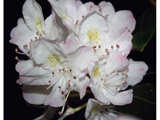
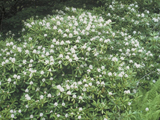
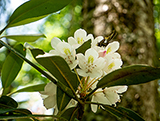
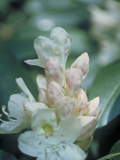
Evergreen, thicket-forming shrub or tree with short, crooked trunk, broad, rounded crown of many stout, crooked branches, and large white blossoms. Great-laurel or rosebay rhododendron is a loose, open, broadleaf evergreen with multiple-trunks, upright branching, and the largest leaves of all native rhododendrons. The plant grows 4-15 ft. in the north, but can grow 30 ft. high in favorable sites. Its foliage is dark blue-green and leathery. Large, bell-shaped, white to purplish-pink, spotted flowers appear in terminal clusters of 16-24.
Rosebay Rhododendron is abundant in the Great Smoky Mountains National Park. Often grown as an ornamental, it is one of the hardiest and largest evergreen rhododendrons. The wood is occasionally used for tool handles, and a home remedy has been prepared from the leaves.
Plant Characteristics
Duration: PerennialHabit: Shrub
Leaf Retention: Evergreen
Leaf Arrangement: Alternate
Leaf Complexity: Simple
Breeding System: Flowers Bisexual
Fruit Type: Capsule
Size Notes: Up to about 30 feet tall, often much shorter.
Leaf: Dark Green
Fruit: Brown
Bloom Information
Bloom Color: White , PinkBloom Time: Jun , Jul , Aug
Distribution
USA: AL , CT , DC , GA , KY , MA , MD , ME , NC , NH , NJ , NY , OH , PA , RI , SC , TN , VA , VT , WVCanada: NS
Native Distribution: W. ME to NY & OH, s., especially in the mts., s. to n. GA
Native Habitat: Moist, dense woods; steep stream banks; mountain slopes
Growing Conditions
Water Use: MediumLight Requirement: Part Shade
Soil Moisture: Moist , Wet
Soil pH: Acidic (pH<6.8)
CaCO3 Tolerance: None
Soil Description: Cool, moist, well-drained soil.
Benefit
Warning: Rhododendrons contain poisonous substances and should not be ingested by humans or animals. Honey made from flowers also may be toxic. POISONOUS PARTS: All parts. Highly Toxic, May be Fatal if eaten. Symptoms include salivation, watering of eyes and nose, abdominal pain, loss of energy, depression, nausea and vomiting, diarrhea, weakness, difficult breathing, progressive paralysis of arms and legs, coma. Toxic Principle: Andromedotoxin. (Poisonous Plants of N.C.)Conspicuous Flowers: yes
Attracts: Birds
Value to Beneficial Insects
Special Value to Bumble BeesThis information was provided by the Pollinator Program at The Xerces Society for Invertebrate Conservation.
Propagation
Description: Combine seeds loosely with sphagnum moss and sprinkle lightly over a 2:1 perlite/peat mixture. Germinate under mist or a plastic tent. Optimum temperatures for germination are 45-50 degrees. Transplant seedlings to acid soil with a high content of orgaSeed Treatment: No pretreatment is necessary.
Commercially Avail: yes
Find Seed or Plants
View propagation protocol from Native Plants Network.
Mr. Smarty Plants says
Shrub for barrier fence in Alexandria, Virginia
August 19, 2009
Hi. we need plants to act as a barrier fence, 15 feet tall, partial shade. We are considering a holly or virginia magnolia. What can you suggest?
thank you,
Nikita
view the full question and answer
National Wetland Indicator Status
| Region: | AGCP | AK | AW | CB | EMP | GP | HI | MW | NCNE | WMVE |
| Status: | FAC | FAC | FAC | FAC |
From the National Organizations Directory
According to the species list provided by Affiliate Organizations, this plant is on display at the following locations:Mt. Cuba Center - Hockessin, DE
Bibliography
Bibref 1620 - Gardening with Native Plants of the South (Reprint Edition) (2009) Wasowski, S. with A. WasowskiSearch More Titles in Bibliography
Web Reference
Webref 38 - Flora of North America (2019) Missouri Botanical Garden, St. Louis, MO & Harvard University Herbaria, Cambridge, MA.From the Archive
Wildflower Newsletter 1988 VOL. 5, NO.2 - Researching Wildflower Seed Quality, Wildflower Center Receives $500 -000 Gift, ...Wildflower Newsletter 1992 VOL. 9, NO.1 - Research Update, Creating Native Lawn with Sod, Director's Report, What Makes Pl...
Additional resources
USDA: Find Rhododendron maximum in USDA PlantsFNA: Find Rhododendron maximum in the Flora of North America (if available)
Google: Search Google for Rhododendron maximum
Metadata
Record Modified: 2022-10-11Research By: TWC Staff