Native Plants

Plant Database
Search for native plants by scientific name, common name or family. If you are not sure what you are looking for, try the Combination Search or our Recommended Species lists.
Wasowski, Sally and Andy
Quercus agrifolia
Quercus agrifolia Née
California Live Oak, Coast Live Oak, Encino Verde
Fagaceae (Beech Family)
Synonym(s):
USDA Symbol: quag
USDA Native Status: L48 (N)
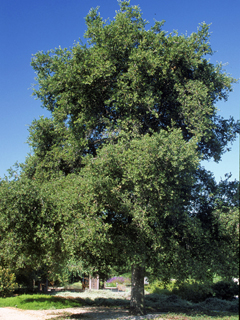
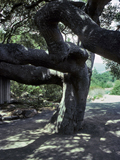
A picturesque, broad-canopied, evergreen oak, 20-50 ft. high and wide. Old trees can reach 100 ft. Thick, slightly glossy, gray-green leaves are oval and holly-like.Evergreen tree with short, stout trunk; many large, crooked, spreading branches; and broad, rounded crown; sometimes shrubby. This is the common oak of the California coast and foothills, forming parklike groves that often appear in the scenery of motion pictures made in Hollywood.
Plant Characteristics
Duration: PerennialHabit: Tree
Leaf Retention: Evergreen
Leaf Arrangement: Alternate
Leaf Complexity: Simple
Leaf Shape: Elliptic
Leaf Venation: Pinnate
Leaf Texture: Leathery
Breeding System: Flowers Unisexual , Monoecious
Inflorescence: Catkin , Spike
Fruit Type: Nut
Size Notes: Height to 100 feet.
Leaf: Green
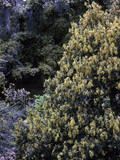
Flower: Male catkins 2-4 inches long.
Fruit: Light brown acorn. 1 to 1 1/2 inches long.
Bloom Information
Bloom Color: Red , Yellow , GreenBloom Time: Mar , Apr , May
Bloom Notes: Males yellow-green catkin, females reddish green spike.
Distribution
USA: CANative Distribution: CA Coast Ranges from Sonoma Co. s. to Baja California
Native Habitat: Coastal valleys & slopes below 3500 ft.
Growing Conditions
Water Use: MediumLight Requirement: Sun , Part Shade
CaCO3 Tolerance: Low
Soil Description: Well-drained soil.
Benefit
Use Ornamental: Hedge.Use Wildlife: Attracts Oak Titmouse, Western Scrub Jay, Steller's Jay, Chestnut-backed Chickadee, and about 30 other species of birds.
Use Food: The acorns were among those preferred by Indians; after removing the shells, they ground the seeds into meal, which was washed to remove the bitter taste, and boiled into mush or baked in ashes as bread.
Use Other: Long-lived.
Interesting Foliage: yes
Attracts: Birds , Butterflies
Larval Host: California sister butterfly.
Butterflies and Moths of North America (BAMONA)
|
Propertius Duskywing (Erynnis propertius) 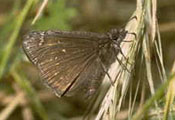 Larval Host |
Mournful Duskywing (Erynnis tristis) 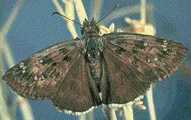 Larval Host |
California Sister (Adelpha bredowii) 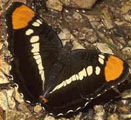 Larval Host |
Find Seed or Plants
Find seed sources for this species at the Native Seed Network.
View propagation protocol from Native Plants Network.
From the National Organizations Directory
According to the species list provided by Affiliate Organizations, this plant is on display at the following locations:Santa Barbara Botanic Garden - Santa Barbara, CA
Native Seed Network - Corvallis, OR
Bibliography
Bibref 1186 - Field Guide to Moths of Eastern North America (2005) Covell, C.V., Jr.Bibref 1185 - Field Guide to Western Butterflies (Peterson Field Guides) (1999) Opler, P.A. and A.B. Wright
Bibref 995 - Native Landscaping from El Paso to L.A. (2000) Wasowski, S. and A. Wasowski
Search More Titles in Bibliography
Additional resources
USDA: Find Quercus agrifolia in USDA PlantsFNA: Find Quercus agrifolia in the Flora of North America (if available)
Google: Search Google for Quercus agrifolia
Metadata
Record Modified: 2015-12-16Research By: TWC Staff