Native Plants

Plant Database
Search for native plants by scientific name, common name or family. If you are not sure what you are looking for, try the Combination Search or our Recommended Species lists.
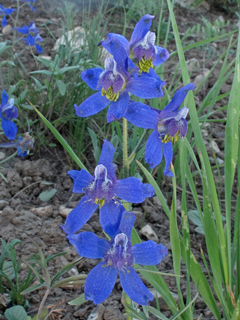
Cressler, Alan
Delphinium nuttallianum
Delphinium nuttallianum Pritz. ex Walp.
Twolobe Larkspur, Two-lobe Larkspur, Delphinium
Ranunculaceae (Buttercup Family)
Synonym(s): Delphinium nelsonii, Delphinium nelsonii ssp. utahense, Delphinium nuttallianum var. fulvum, Delphinium nuttallianum var. levicaule, Delphinium sonnei
USDA Symbol: denu2
USDA Native Status: L48 (N), CAN (N)
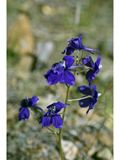
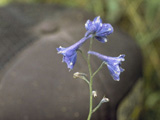
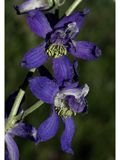
An extremely variable delphinium over its wide range. Stems are usually single, 6-30 in. tall and generally unbranched. Leaves are few and mostly basal, 2-4 times lobed into linear segments. Generally only 1 stem with a few leaves, mostly at base, and blue or blue-violet bilateral flowers in one or several open racemes. The flowering spikes are loosely flowered and ascending with white to grayish-blue to deep blue-purple, spurred flowers. The degree of pubescence is the most notable distinction among varieties.
Representative of a host of low larkspur species with blue or blue-violet flowers occurring in many habitats, from dry California grasslands and chaparral to southwestern deserts and high mountaintops. They are difficult to distinguish, and in the West are second only to locoweeds (Astragalus and Oxytropis) as a livestock poison, especially among cattle.


Plant Characteristics
Duration: PerennialHabit: Herb
Fruit Type: Follicle
Size Notes: Up to about 30 inches tall.
Bloom Information
Bloom Color: White , Blue , PurpleBloom Time: Mar , Apr , May , Jun , Jul
Distribution
USA: AZ , CA , CO , ID , MT , NE , NM , NV , OR , SD , UT , WA , WYCanada: BC
Native Distribution: S.w. B.C., s., in the Cascade foothills, to CA, e. to Alt., SD, NE, CO & AZ
Native Habitat: Dry foothills, valleys & sagebrush deserts
Growing Conditions
Light Requirement: SunSoil Moisture: Dry
Soil Description: Dry, well-drained soils.
Benefit
Use Wildlife: HummingbirdsWarning: Plants of the genus Delphinium contain toxins, and no parts of them should ever be eaten. They can be fatally poisonous to both humans and animals. POISONOUS PARTS: All parts. Highly Toxic; May be Fatal if eaten. Symptoms include burning of lips and mouth, numbness of throat; intense vomiting and diarrhea, muscular weakness and spasms, weak pulse, paralysis of the respiratory system, convulsions. Toxic Principle: Alkaloids delphinine, ajacine, and others. (Poisonous Plants of N.C.)
Attracts: Hummingbirds
Propagation
Description: Sow fresh seeds in fall for outdoor stratification.Commercially Avail: yes
Find Seed or Plants
Find seed sources for this species at the Native Seed Network.
Mr. Smarty Plants says
Native grasses for medians in Colorado Springs
June 11, 2010
Our city has stopped watering our historic landscaped medians due to severe budget shortfalls. The medians were historically tree boulevards but have had curb and gutter and blue grass added over th...
view the full question and answer
National Wetland Indicator Status
| Region: | AGCP | AK | AW | CB | EMP | GP | HI | MW | NCNE | WMVE |
| Status: | FAC | FACU | FAC |
From the National Organizations Directory
According to the species list provided by Affiliate Organizations, this plant is on display at the following locations:Native Seed Network - Corvallis, OR
Web Reference
Webref 38 - Flora of North America (2019) Missouri Botanical Garden, St. Louis, MO & Harvard University Herbaria, Cambridge, MA.Webref 23 - Southwest Environmental Information Network (2009) SEINet - Arizona Chapter
Additional resources
USDA: Find Delphinium nuttallianum in USDA PlantsFNA: Find Delphinium nuttallianum in the Flora of North America (if available)
Google: Search Google for Delphinium nuttallianum
Metadata
Record Modified: 2023-02-06Research By: TWC Staff