Native Plants

Plant Database
Search for native plants by scientific name, common name or family. If you are not sure what you are looking for, try the Combination Search or our Recommended Species lists.
Makin, Julie
Cercis canadensis
Cercis canadensis L.
Eastern Redbud, Redbud
Fabaceae (Pea Family)
Synonym(s):
USDA Symbol: ceca4
USDA Native Status: L48 (N), CAN (N)
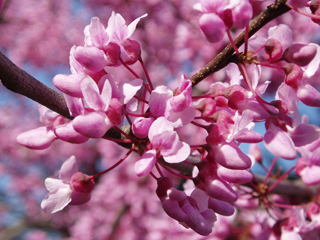
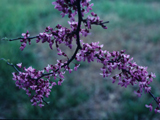
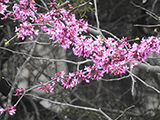
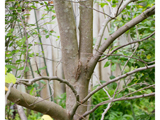
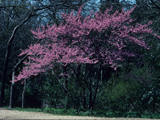
Tree with short trunk, rounded crown of spreading branches, and pink flowers that cover the twigs in spring. Redbud is a 15-30 ft. tree with one to several picturesque, maroon-purple trunks and a wide, umbrella-like crown. Its pink flowers, borne in tight clusters along the stems and branches before new leaves appear, create a showy spring display. Smooth, heart-shaped, deciduous foliage does not have significant fall color. Trees from the southern part of the species’ range have smaller, glossier leaves and often a more compact form. Stunning tiny pink flower clusters cover the entire tree.
Three geographic varieties are recognized, with Cercis canadensis var. canadensis properly referred to as Eastern Redbud and occurring from the Atlantic coast to central Texas. It reaches the largest size, requires the most water, and has larger, less glossy leaves than the other varieties. Variety texensis, Texas Redbud, has smaller, glossier leaves with slightly wavy edges, a generally smaller form, and more of a tendency to have red seedpods than variety canadensis. It ranges from Oklahoma south through central Texas to northeastern Mexico. The smallest variety is C. canadensis var. mexicana, Mexican Redbud, with small, very glossy, wavy-edged leaves and a smaller, shrubbier stature than the others, occurring in west Texas and adjacent Mexico. All varieties are popular as ornamentals because of their brilliant early spring flowers, displayed en masse on the bare branches before the plant has leafed out. The flowers can be eaten as a salad or fried. A separate species, Cercis orbiculata, Western Redbud, occurs from Arizona to California. According to myth, Judas Iscariot hung himself on the related Judas-tree (Cercis siliquastrum L.) of western Asia and southern Europe, after which the white flowers turned red with shame or blood.
Plant Characteristics
Duration: PerennialHabit: Tree
Leaf Retention: Deciduous
Leaf Arrangement: Alternate
Leaf Complexity: Simple
Leaf Shape: Cordate
Leaf Texture: Leathery
Breeding System: Flowers Bisexual
Fruit Type: Legume
Size Notes: Up to about 30 feet tall.
Leaf: Green
Autumn Foliage: yes
Fruit: Red, Brown Approximately 3-1/2 inches long.
Bloom Information
Bloom Color: PinkBloom Time: Mar , Apr , May
Distribution
USA: AL , AR , CT , DC , DE , FL , GA , IA , IL , IN , KS , KY , LA , MA , MD , MI , MO , MS , NC , NE , NJ , NM , NY , OH , OK , PA , SC , TN , TX , VA , WVCanada: ON
Native Distribution: FL to TX, n. to PA, OH, s. MI, s. IA & s.e. NE, south to Veracruz in eastern Mexico
Native Habitat: Woods; stream banks; limestone bluffs
Growing Conditions
Water Use: LowLight Requirement: Part Shade , Shade
Soil Moisture: Moist
CaCO3 Tolerance: Low
Soil Description: Moist, fertile, well-drained soils.
Benefit
Use Food: Add flowers and flower buds to salads, breads and pancakes. They have a slightly sour taste, high in vitamin C. Young pods may be eaten raw, boiled or sauteed. (Tull)Use Other: Boiled in water, redbud twigs produce a yellow dye. (Kershaw)
Conspicuous Flowers: yes
Fragrant Flowers: yes
Attracts: Birds
Deer Resistant: Moderate
Value to Beneficial Insects
Special Value to Native BeesSpecial Value to Bumble Bees
Provides Nesting Materials/Structure for Native Bees
This information was provided by the Pollinator Program at The Xerces Society for Invertebrate Conservation.
Propagation
Description: The simplest way to grow redbuds is to scarify seeds and plant outdoors in the fall. Cuttings are nearly impossible. Seedlings which may develop around mature trees are easily moved when very small.Seed Collection: Harvest legumes when they turn brown and begin to dry. Early collection may minimize weevil damage. Collect large amounts to compensate for a high percentage of unsound seed. Air-dry seeds and store in sealed, refrigerated containers.
Seed Treatment: Scarify for 10-20 minutes in concentrated sulfuric acid, then stratify for 30-60 days at 41 degrees.
Commercially Avail: yes
Find Seed or Plants
View propagation protocol from Native Plants Network.
Mr. Smarty Plants says
Flowering and evergreen shrubs for landscape in Indiana
May 29, 2010
I live in Southern Indiana and we are getting ready to redesign our front landscape. Currently, we have some yews and other shrubs that are unruly and require a lot of pruning and care. My husband hat...
view the full question and answer
Native alternative for Japanese Red Maple in Oklahoma
October 12, 2009
Mr. Smarty Plants, I am looking for a native alternative to a Japanese Red Maple. I would like a small tree that I can put in my front garden that will not pose a security risk my being overgrown and ...
view the full question and answer
Non-toxic shade trees for horses in Florida
April 01, 2009
Looking for non poisonous shade trees for pasture with horses. Would prefer flowering or something that changes color. Thank you.
view the full question and answer
Brown circular ring in trimmed branches of redbud tree
January 22, 2009
I have a redbud tree that was recently trimed back. When looking at the cross section of the branches, I noticed a brown circular ring. Is this a problem and if so what can I do to correct it?
view the full question and answer
Name of the rough-barked mimosa (Albizia kalkora)
February 12, 2008
I read two years ago that there was two different mimosa trees one that is common and has the smooth bark and the other one had a rough bark. I am Interested in the one who has the rough bark and the ...
view the full question and answer
National Wetland Indicator Status
| Region: | AGCP | AK | AW | CB | EMP | GP | HI | MW | NCNE | WMVE |
| Status: | UPL | UPL | FACU | UPL | FACU | FACU | UPL |
From the National Organizations Directory
According to the species list provided by Affiliate Organizations, this plant is on display at the following locations:Fredericksburg Nature Center - Fredericksburg, TX
Lady Bird Johnson Wildflower Center - Austin, TX
Native Plant Center at Westchester Community College, The - Valhalla, NY
Pineywoods Native Plant Center - Nacogdoches, TX
Delaware Nature Society - Hockessin, DE
Brackenridge Field Laboratory - Austin, TX
Crosby Arboretum - Picayune, MS
Georgia Native Plant Society - Atlanta, GA
Longwood Gardens - Kennett Square, PA
Mt. Cuba Center - Hockessin, DE
Bibliography
Bibref 307 - Edible and Useful Plants of Texas and the Southwest: Including recipes, harmful plants, natural dyes, and textile fibers: A Practical Guide (1999) Tull, D.Bibref 298 - Field Guide to Texas Trees (1999) Simpson, B.J.
Bibref 1620 - Gardening with Native Plants of the South (Reprint Edition) (2009) Wasowski, S. with A. Wasowski
Bibref 481 - How to Grow Native Plants of Texas and the Southwest: Revised and Updated Edition (2001) Nokes, J.
Bibref 841 - Native Alternatives to Invasive Plants (2006) Burrell, C. C.
Bibref 318 - Native Texas Plants: Landscaping Region by Region (2002) Wasowski, S. & A. Wasowski
Bibref 248 - Texas Wildflowers: A Field Guide (1984) Loughmiller, C. & L. Loughmiller
Search More Titles in Bibliography
Additional resources
USDA: Find Cercis canadensis in USDA PlantsFNA: Find Cercis canadensis in the Flora of North America (if available)
Google: Search Google for Cercis canadensis
Metadata
Record Modified: 2018-11-30Research By: TWC Staff, GDG