Native Plants

Plant Database
Search for native plants by scientific name, common name or family. If you are not sure what you are looking for, try the Combination Search or our Recommended Species lists.
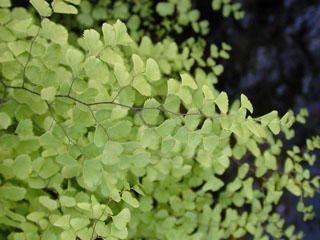
Marcus, Joseph A.
Adiantum capillus-veneris
Adiantum capillus-veneris L.
Southern Maidenhair Fern, Common Maidenhair Fern, Maidenhair Fern, Venus Hair Fern
Pteridaceae (Maidenhair Fern Family)
Synonym(s): Adiantum capillus-veneris var. modestum, Adiantum capillus-veneris var. protrusum, Adiantum modestum
USDA Symbol: adca
USDA Native Status: L48 (N), HI (N), PR (N), CAN (N)
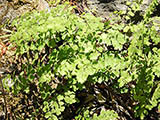
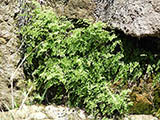
This plant has specific growing requirements that must be met to be successful in a garden setting. Though it lacks the fan-like pattern of Northern maidenhair, the fine, lacy foliage of Southern maidenhair has the same a graceful, delicate character. This fern grows from 6 inches to 1 foot in height; its fronds arising in clusters from creeping rhizomes.
Listed as an endangered species in North Carolina (known as southern maidenhair-fern there) and threatened in Kentucky (known as venus hair fern there). Mostly found in the lower half of the U.S.and some parts of the tropics, the only Canadian site is near Fairmont Hot Springs, B.C.
Plant Characteristics
Duration: PerennialHabit: Fern
Leaf Retention: Evergreen
Leaf Venation: Dichotomous
Size Notes: Height 6-20 inches.
Leaf: Green
Bloom Information
Bloom Color: Not ApplicableBloom Notes: Not a flowering plant. Reproduces by spores.
Distribution
USA: AL , AR , AZ , CA , CO , FL , GA , HI , KY , LA , MD , MO , MS , NC , NM , NV , OH , OK , SC , SD , TN , TX , UT , VACanada: BC
Native Distribution: VA to FL, w. to KY, s. MO, s.w. CO & CA; south to South America. Also Eurasia.
Native Habitat: Limestone kept moist by moving water in shade
Growing Conditions
Water Use: Medium , HighLight Requirement: Part Shade , Shade
Soil Moisture: Moist , Wet
Soil pH: Alkaline (pH>7.2)
CaCO3 Tolerance: High
Cold Tolerant: yes
Heat Tolerant: yes
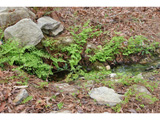
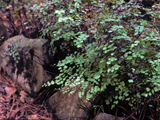
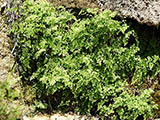
Soil Description: Moist, well-drained sand, loam or limestone. Can occur as an attached mass growing directly on rock outcroppings where moisture is present
Conditions Comments: It prefers moisture year-round. Without watering, it will go dormant by July. Where water and drainage are adequate, the plant makes a lush ground cover. It is often used in crevices of rock walls and well-drained cobbles, especially in cool, north exposures.
Benefit
Use Ornamental: Ground cover in the right circumstances, bog edge plantInteresting Foliage: yes
Deer Resistant: High
Propagation
Propagation Material: Root DivisionDescription: Propagated by rhizome division or spores.
Commercially Avail: yes
Maintenance: Dead foliage can be cut back whenever necessary to keep plants fresh looking.
Mr. Smarty Plants says
Ground cover for trails in Northeast Texas
January 09, 2008
I have several acres of wooded land in Northeast Texas, Southern Lamar County. Both sandy and black land. I have created trails through the woods and would like to plant a native ground cover or gras...
view the full question and answer
National Wetland Indicator Status
| Region: | AGCP | AK | AW | CB | EMP | GP | HI | MW | NCNE | WMVE |
| Status: | FACU | FACW | FACW | FACU | FACW | FACU | FACU | FACW |
From the National Organizations Directory
According to the species list provided by Affiliate Organizations, this plant is on display at the following locations:Lady Bird Johnson Wildflower Center - Austin, TX
Santa Barbara Botanic Garden - Santa Barbara, CA
Brackenridge Field Laboratory - Austin, TX
Nueces River Authority - Uvalde, TX
NPSOT - Austin Chapter - Austin, TX
Mt. Cuba Center - Hockessin, DE
Bibliography
Bibref 1620 - Gardening with Native Plants of the South (Reprint Edition) (2009) Wasowski, S. with A. WasowskiBibref 293 - Manual of the Vascular Plants of Texas (1979) Correll, D. S. & M. C. Johnston
Bibref 1210 - Native Ferns, Moss, and Grasses: From Emerald Carpet to Amber Wave, Serene and Sensuous Plants for theGarden (2008) William Cullina
Bibref 318 - Native Texas Plants: Landscaping Region by Region (2002) Wasowski, S. & A. Wasowski
Search More Titles in Bibliography
Additional resources
USDA: Find Adiantum capillus-veneris in USDA PlantsFNA: Find Adiantum capillus-veneris in the Flora of North America (if available)
Google: Search Google for Adiantum capillus-veneris
Metadata
Record Modified: 2013-09-09Research By: TWC Staff