Native Plants

Plant Database
Search for native plants by scientific name, common name or family. If you are not sure what you are looking for, try the Combination Search or our Recommended Species lists.
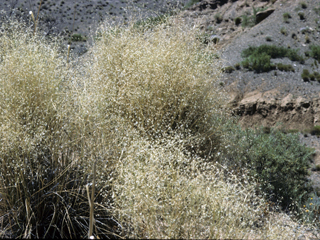
Wasowski, Sally and Andy
Achnatherum hymenoides
Achnatherum hymenoides (Roem. & Schult.) Barkworth
Indian Ricegrass, Indian Millet, Sandgrass
Poaceae (Grass Family)
Synonym(s): Eriocoma cuspidata, Oryzopsis hymenoides, Stipa hymenoides
USDA Symbol: achy
USDA Native Status: L48 (N), CAN (N)
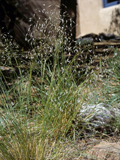
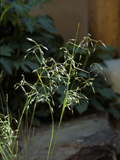
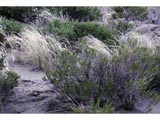
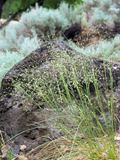
Indian rice grass is a 1-2 ft., perennial bunchgrass. The sage-green, wiry foliage and ivory-colored seedheads give the grass an overall light, airy appearance. Foliage turns tan when dormant.
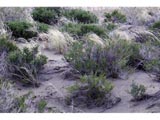
This beautiful grass often dominates sand dunes. It is a highly palatable species for many animals including livestock.
Plant Characteristics
Duration: PerennialHabit: Grass/Grass-like
Root Type: Fibrous
Leaf Retention: Deciduous
Leaf Arrangement: Alternate
Leaf Complexity: Simple
Leaf Shape: Lanceolate
Leaf Venation: Parallel
Leaf Margin: Entire
Fruit Type: Caryopsis
Size Notes: Up to about 2 feet tall.
Leaf: Green
Bloom Information
Bloom Color: Yellow , GreenBloom Time: Jun , Jul , Aug , Sep
Distribution
USA: AR , AZ , CA , CO , ID , KS , MN , MO , MT , ND , NE , NM , NV , OK , OR , SD , TX , UT , WA , WI , WYCanada: BC
Native Distribution: E. of the Cascades from B.C. to CA, e. to Man., MN, w. KS, w. TX & n. Mex.
Native Habitat: Dry grasslands; deserts
Growing Conditions
Water Use: LowLight Requirement: Sun
Soil Moisture: Dry
CaCO3 Tolerance: High
Heat Tolerant: yes
Soil Description: Deep, sandy or rocky soils.
Conditions Comments: Indian ricegrass is very drought tolerant and useful in land reclamation projects. Remove old clumps to allow self-sown seedlings room to develop. This grass can be mowed to 8 in. in early fall. Achnatherum hymenoides is a highly drought tolerant native bunchgrass. The seed has a hard coat that prolongs dormancy, taking up to two years for an area that has been seeded to become fully established.
Benefit
Use Ornamental: Indian ricegrass produces graceful inflorescence, 1 to 3 ft high & is used as an ornamental bunching grass in the landscape.Use Wildlife: Wildlife forage. Seeds are sought by birds and small mammals.
Use Food: The seeds were ground for flour, mixed with water and cooked into a mush by the Montana Indians, Navajo, Hopi, Apache, Paiute, and others.
Use Other: Palatable for most grazing animals, can sustain relatively high grazing pressure if it is allowed to produce enough seed for reproduction.Indian ricegrass decreases under grazing because grazing removes the seeds, and therefore plants are not replaced.
Conspicuous Flowers: yes
Attracts: Birds , Butterflies
Larval Host: Skippers
Propagation
Description: Sow seeds 1-2 in. deep. Increase by division in early spring or fall.Seed Treatment: Seeds are dormant without pretreatment. Seeds must be scarified with H2SO4 to obtain germination. Mechanical scarification is also useful.
Commercially Avail: yes
Find Seed or Plants
Find seed sources for this species at the Native Seed Network.
View propagation protocol from Native Plants Network.
Mr. Smarty Plants says
Plants to stop erosion in Arizona
January 17, 2009
I'm looking for a plant to stop erosion; I have big wash outs that are starting to erode my yard so I guess I'm looking for deep rooting plants. I live south of Tucson, Arizona. If you can advise me...
view the full question and answer
Groundcover for erosion control
September 23, 2008
I live in southern california. What is the best groundcover
to plant on a slope to prevent erosion?
view the full question and answer
National Wetland Indicator Status
| Region: | AGCP | AK | AW | CB | EMP | GP | HI | MW | NCNE | WMVE |
| Status: | UPL | FACU | FACU | FACU | UPL |
From the National Organizations Directory
According to the species list provided by Affiliate Organizations, this plant is on display at the following locations:Santa Barbara Botanic Garden - Santa Barbara, CA
Texas Parks and Wildlife Department - Austin, TX
Native Seed Network - Corvallis, OR
Bibliography
Bibref 946 - Gardening with Prairie Plants: How to Create Beautiful Native Landscapes (2002) Wasowski, SallyBibref 318 - Native Texas Plants: Landscaping Region by Region (2002) Wasowski, S. & A. Wasowski
Search More Titles in Bibliography
Additional resources
USDA: Find Achnatherum hymenoides in USDA PlantsFNA: Find Achnatherum hymenoides in the Flora of North America (if available)
Google: Search Google for Achnatherum hymenoides
Metadata
Record Modified: 2009-04-18Research By: BJG, MWJ