Native Plants

Plant Database
Search for native plants by scientific name, common name or family. If you are not sure what you are looking for, try the Combination Search or our Recommended Species lists.
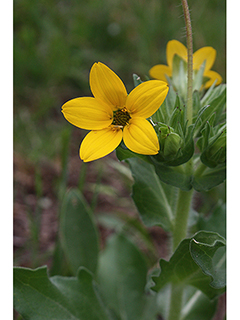
Smith, R.W.
Lindheimera texana
Lindheimera texana A. Gray & Engelm.
Texas Yellowstar, Texas Star, Texas Yellow-star, Lindheimer Daisy
Asteraceae (Aster Family)
Synonym(s):
USDA Symbol: LITE3
USDA Native Status: L48 (N)
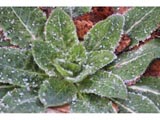
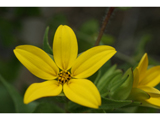
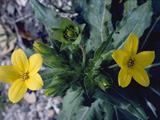
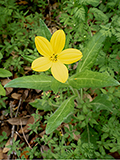
Texas star plants are 6-24 inches tall and widely branched. Stems and branches are hairy. The lower leaves are alternate and coarsely toothed, but the upper ones are opposite and smooth on the edges, 2-2 1/2 inches long. There are 1 to several flower heads in a cluster at the end of each stem. Each flower head has (3)-5-(6) bright yellow ray flowers, each with 2 prominent veins and indented at the tip. Flower heads are 1-1 1/4 inches across. The plant sometimes begins blooming when it is 2 in. tall and continues blooming while growing taller.
Texas Yellowstar is easily cultivated and does well in garden settings.
This genus is named after Ferdinand Jacob Lindheimer (1801-1879) who is often called the Father of Texas Botany because of his work as the first permanent-resident plant collector in Texas. In 1834 Lindheimer immigrated to the United States as a political refugee. He spent from 1843-1852 collecting specimens in Texas. In 1844 he settled in New Braunfels, Texas, and was granted land on the banks of the Comal River, where he continued his plant collecting and attempted to establish a botanical garden. He shared his findings with many others who shared his interest in botany, including Ferdinand von Roemer and Adolph Scheele. Lindheimer is credited with the discovery of several hundred plant species. In addition his name is used to designate forty-eight species and subspecies of plants. He is buried in New Braunfels. His house, on Comal Street in New Braunfels, is now a museum.
Plant Characteristics
Duration: AnnualHabit: Herb
Root Type: Tap
Leaf Shape: Lanceolate
Size Notes: Up to about 2 feet tall.
Flower: Ray and disc flowers borne on capitula. Ray flowers: yellow, typically 5, sometimes 6 and often 3, especially on small plants or on weak stems.
Fruit: Fruit is a cypsela (pl. cypselae). Though technically incorrect, the fruit is often referred to as an achene.
Bloom Information
Bloom Color: YellowBloom Time: Mar , Apr , May
Distribution
USA: AR , LA , OK , TXNative Distribution: Oklahoma and Arkansas south through Texas to Coahuila
Native Habitat: Prairies; roadsides, Abundant in prairies of north central and southern part of east Texas and Edwards Plateau. Well-drained sand, loam, clay, limestone.
Growing Conditions
Water Use: LowLight Requirement: Sun
Soil Moisture: Dry
Soil pH: Circumneutral (pH 6.8-7.2)
Soil Description: Sandy loam or limestone soils. Clay Loam, Medium Loam, Sandy Loam, Sandy
Conditions Comments: Texas star is easily cultivated and does well in garden settings. Texas star can vary somewhat in size, depending on depth, moisture and richness of soil. It makes a good bedding and border plant; you can depend on it to reseed.
Benefit
Conspicuous Flowers: yesNectar Source: yes
Deer Resistant: No
Propagation
Propagation Material: SeedsDescription: Sow seed in fall.
Seed Collection: Collect seed in May. Gardeners like to seed out and plant for color in spring.
Commercially Avail: yes
Find Seed or Plants
Order seed of this species from Native American Seed and help support the Wildflower Center.
From the National Organizations Directory
According to the species list provided by Affiliate Organizations, this plant is on display at the following locations:Lady Bird Johnson Wildflower Center - Austin, TX
Texas Discovery Gardens - Dallas, TX
Brackenridge Field Laboratory - Austin, TX
Texas Master Naturalists - Lost Pines Chapter - Bastrop, TX
NPSOT - Williamson County Chapter - Georgetown, TX
Herbarium Specimen(s)
NPSOT 0412 Collected May 28, 1987 in Bexar County by Harry CliffeNPSOT 0314 Collected Mar 30, 1993 in Comal County by Mary Beth White
NPSOT 0046 Collected May 4, 1990 in Bexar County by Lottie Millsaps
Bibliography
Bibref 765 - McMillen's Texas Gardening: Wildflowers (1998) Howard, D.Bibref 248 - Texas Wildflowers: A Field Guide (1984) Loughmiller, C. & L. Loughmiller
Bibref 328 - Wildflowers of Texas (2003) Ajilvsgi, Geyata.
Bibref 286 - Wildflowers of the Texas Hill Country (1989) Enquist, M.
Search More Titles in Bibliography
Additional resources
USDA: Find Lindheimera texana in USDA PlantsFNA: Find Lindheimera texana in the Flora of North America (if available)
Google: Search Google for Lindheimera texana
Metadata
Record Modified: 2023-01-11Research By: TWC Staff