Native Plants

Plant Database
Search for native plants by scientific name, common name or family. If you are not sure what you are looking for, try the Combination Search or our Recommended Species lists.
Bransford, W.D. and Dolphia
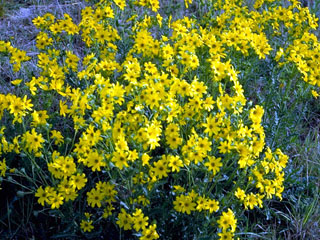
Engelmannia peristenia
Engelmannia peristenia (Raf.) Goodman & C.A. Lawson
Engelmann's Daisy, Engelmann Daisy, Cutleaf Daisy
Asteraceae (Aster Family)
Synonym(s): Engelmannia pinnatifida
USDA Symbol: ENPE4
USDA Native Status: L48 (N)
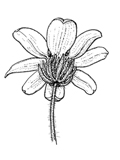
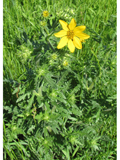
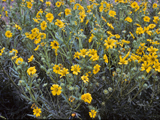
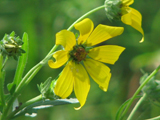
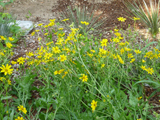
The several stout stems of this perennial usually grow 2 ft. tall and are branched above to form a rounded crown. Long-stalked, yellow, eight-petaled flowers open in late afternoon then fold under in intense heat and sunlight the next day. There are few to several flowers in the terminal clusters about 1 1/2 inches across. The 8-10 ray flowers are 1/2 inch long and are indented at the tip. The deeply cleft and toothed leaves are mostly basal, forming a large clump or winter rosette.
This plant is popular on roadsides and blooms well even in drought conditions. Engelmannia is somewhat unusual in that it is a monotypic genus, meaning it contains one species.
The genus of this plant is named for George Engelmann (1809-1884) who was born in Germany and settled in St. Louis, Missouri, as a young man. He was a physician and botanist, describing especially North American Abies (Firs), Agaves, Cactus (for which he described more than 108 species), Cuscuta (Dodder), Euphorbiaceae (Spurge Family), Juncus (Rushes), Juniperus (“Cedar”), Pinus (Pines), Vitis (Grapes), and Yuccas. When he died much of his collection went to Missouri Botanical Garden.
Plant Characteristics
Duration: PerennialHabit: Herb
Root Type: Tap
Leaf Retention: Evergreen
Leaf Complexity: Pinnate
Size Notes: Up to about 3 feet tall, often shorter.
Flower: Flowers 1 to 1 1/2 inches.
Fruit: Brown. Fruit is a cypsela (pl. cypselae). Though technically incorrect, the fruit is often referred to as an achene.
Bloom Information
Bloom Color: YellowBloom Time: Mar , Apr , May , Jun , Jul
Distribution
USA: AR , AZ , CO , KS , MO , NM , OK , SD , TXNative Distribution: South-central North America from Kansas, Arkansas, and Colorado in the north, south through Texas and New Mexico to northeastern Mexico
Native Habitat: Open, calcareous fields; roadsides
Growing Conditions
Water Use: MediumLight Requirement: Sun
Soil Moisture: Dry
Soil Description: Calcareous loams and clays. Found on dry, open sandy or limestone sites.
Conditions Comments: This plant is popular on roadsides and blooms well even in drought conditions. Engelmann daisy is excellent in a garden border or in a wildflower meadow. Each plant forms an evergreen rosette with deeply lobed leaves. Grows as a sturdy, heat and drought tolerant plant. Birds relish the seeds.
Benefit
Use Food: This plant is preferred by livestock, and will disappear from grazed areas.Conspicuous Flowers: yes
Interesting Foliage: yes
Attracts: Birds
Nectar Source: yes
Deer Resistant: No
Propagation
Propagation Material: SeedsDescription: A fall seeding is recommended. Be sure seeds are in good contact with the soil by lightly raking the soil into loose topsoil. Engelmannia has a long taproot and is best transplanted in winter during its rosette stage.
Seed Collection: Collect seed in June.
Commercially Avail: yes
Maintenance: Supplemental watering may be required if winter and spring are unusually dry. Watering often extends the flowering period. After flowering ceases, allow seeds to completely mature before mowing for reseeding or collecting seed to plant in a new location. If cut back in late summer, they sometimes bloom again in fall.
Find Seed or Plants
Order seed of this species from Native American Seed and help support the Wildflower Center.
Mr. Smarty Plants says
List of native perennial Texas flowers
March 13, 2006
Good day, I am searching for a list of native Texas flowers (preferably perennials) for a flower garden.
Thank you.
view the full question and answer
From the National Organizations Directory
According to the species list provided by Affiliate Organizations, this plant is on display at the following locations:Naval Air Station Kingsville - Kingsville, TX
Lady Bird Johnson Wildflower Center - Austin, TX
Brackenridge Field Laboratory - Austin, TX
Stengl Biological Research Station - Smithville, TX
Texas Parks and Wildlife Department - Austin, TX
NPSOT - Austin Chapter - Austin, TX
NPSOT - Williamson County Chapter - Georgetown, TX
Wildflower Center Seed Bank
LBJWC-56 Collected 2006-05-24 in Travis County by Lady Bird Johnson Wildflower CenterBibliography
Bibref 946 - Gardening with Prairie Plants: How to Create Beautiful Native Landscapes (2002) Wasowski, SallyBibref 318 - Native Texas Plants: Landscaping Region by Region (2002) Wasowski, S. & A. Wasowski
Bibref 248 - Texas Wildflowers: A Field Guide (1984) Loughmiller, C. & L. Loughmiller
Search More Titles in Bibliography
Web Reference
Webref 38 - Flora of North America (2019) Missouri Botanical Garden, St. Louis, MO & Harvard University Herbaria, Cambridge, MA.From the Archive
Wildflower Newsletter 1984 VOL. 1, NO.4 - Lady Bird Heartened by Progress, Horticultural Society Annual Meeting Held, Dire...Additional resources
USDA: Find Engelmannia peristenia in USDA PlantsFNA: Find Engelmannia peristenia in the Flora of North America (if available)
Google: Search Google for Engelmannia peristenia
Metadata
Record Modified: 2022-12-26Research By: TWC Staff, TMH