Native Plants

Plant Database
Search for native plants by scientific name, common name or family. If you are not sure what you are looking for, try the Combination Search or our Recommended Species lists.
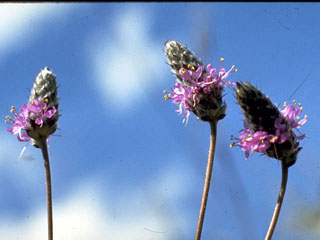
Northington, David K.
Dalea purpurea var. purpurea
Dalea purpurea Vent. var. purpurea
Purple Prairie Clover, Violet Prairie Clover
Fabaceae (Pea Family)
Synonym(s): Petalostemon mollis, Petalostemon purpureus, Petalostemon purpureus var. mollis
USDA Symbol: DAPUP
USDA Native Status: L48 (N), CAN (N)
Purple prairie-clover is a popular prairie perennial with delicate, foliage and showy flowers. Numerous slender stems rise 1-3 feet. and bear small leaves divided into linear segments. Tiny, individual flowers cluster around a cylinder-like cone. The bright, magenta-purple flowers start as a ring around the base of the cone and work upward as the season advances.


Plant Characteristics
Duration: PerennialHabit: Herb
Leaf Arrangement: Alternate
Fruit Type: Legume
Size Notes: Up to about 3 feet tall.
Leaf: Green
Bloom Information
Bloom Color: Pink , PurpleBloom Time: May , Jun , Jul
Distribution
USA: AL , AR , AZ , CO , IA , IL , IN , KS , KY , LA , MI , MN , MO , MS , MT , ND , NE , NM , NY , OH , OK , SD , TN , TX , WI , WYCanada: MB , SK
Native Distribution: E. IN to s. Alt., s. to MS, n. TX & NM
Native Habitat: Prairies; open woods, Infrequent in West Texas in open grasslands.
Growing Conditions
Water Use: LowLight Requirement: Sun
Soil Moisture: Moist
CaCO3 Tolerance: Medium
Cold Tolerant: yes
Heat Tolerant: yes
Soil Description: Well-drained soils. Well-drained calcareous soils.
Conditions Comments: The cheerful purple flowers mix well when planted with grasses in a short grass meadow garden or a mixed perennial garden with other plants with similar growing requirements. Purple prairie clover is a good source of nectar for insects and will also last nicely as a cut flower. Like other members of the pea family, this plant adds nutrients back to the soil when planted in masses.
Benefit
Use Wildlife: Birds, ButterfliesConspicuous Flowers: yes
Attracts: Birds
Value to Beneficial Insects
Special Value to Native BeesSpecial Value to Bumble Bees
Special Value to Honey Bees
This information was provided by the Pollinator Program at The Xerces Society for Invertebrate Conservation.
Propagation
Propagation Material: SeedsDescription: Easily propagated from unstratified seed in fall or stratified seed in spring.
Seed Collection: Collect in Aug. and Sep.
Seed Treatment: Scarification, inoculation, moist stratification for 10 days
Commercially Avail: yes
From the National Organizations Directory
According to the species list provided by Affiliate Organizations, this plant is on display at the following locations:Lady Bird Johnson Wildflower Center - Austin, TX
Bibliography
Bibref 328 - Wildflowers of Texas (2003) Ajilvsgi, Geyata.Search More Titles in Bibliography
Research Literature
Reslit 2888 - The genus Dalea (Fabaceae) in Alabama (2013) Woods, M. and W.S. HughesThis information was provided by the Florida WIldflower Foundation.
Search More Titles in Research Literature
Additional resources
USDA: Find Dalea purpurea var. purpurea in USDA PlantsFNA: Find Dalea purpurea var. purpurea in the Flora of North America (if available)
Google: Search Google for Dalea purpurea var. purpurea
Metadata
Record Modified: 2010-05-10Research By: TWC Staff, GDB