Native Plants

Plant Database
Search for native plants by scientific name, common name or family. If you are not sure what you are looking for, try the Combination Search or our Recommended Species lists.
Holmes, James Garland
Crataegus marshallii
Crataegus marshallii Eggl.
Parsley Hawthorn, Parsleyleaf Hawthorn
Rosaceae (Rose Family)
Synonym(s):
USDA Symbol: CRMA5
USDA Native Status: L48 (N)
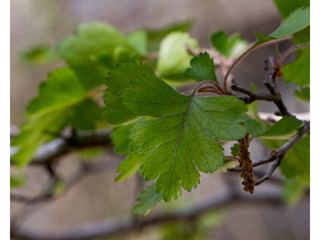
Parsley hawthorne is a small, deciduous tree or shrub to 25 ft. with slender, thorny - or sometimes thornless - branches. The dainty, white, five-petaled blossoms are followed by bright-red, persistent fruits. This species has very ornamental foliage; it is deeply cut, resembling garden parsley. Small tree with wide-spreading, slender branches and broad, irregular, open crown of parseylike foliage; or often, a low much-branched shrub. Leaves become colorful in fall.
One of the easiest hawthorns to recognize, with its small, divided leaves and small, oblong fruit. The Latin species name honors Humphry Marshall (1722-1801), U.S. botanist.


Plant Characteristics
Duration: PerennialHabit: Shrub , Tree
Leaf Retention: Deciduous
Fruit Type: Pome
Size Notes: Up to about 25 feet tall.
Leaf: Green
Flower: Flower 1 inch.
Bloom Information
Bloom Color: WhiteBloom Time: Mar , Apr , May
Distribution
USA: AL , AR , FL , GA , IL , KY , LA , MO , MS , NC , OK , SC , TN , TX , VANative Distribution: FL to s. VA, w. to e. TX & s.e. MO
Native Habitat: Sandy, alluvial woods & low pastures
Growing Conditions
Water Use: MediumLight Requirement: Part Shade
Soil Moisture: Dry
CaCO3 Tolerance: Low
Soil Description: Sandy, Sandy Loam, Medium Loam, Clay Loam, Clay, Acid-based
Conditions Comments: Seasonally poor drainage is okay. Adapts well to garden soils.
Benefit
Use Ornamental: Fall conspicuous, Blooms ornamentalUse Wildlife: Nectar-butterflies, Fruit-mammals, Fruit-birds, Only a few birds like the fruit of Crataegus and, consequently, they remain effective for a long time.
Conspicuous Flowers: yes
Value to Beneficial Insects
Special Value to Native BeesThis information was provided by the Pollinator Program at The Xerces Society for Invertebrate Conservation.
Propagation
Description: Scarified and stratified seed or scarified seed followed by outdoor sowingSeed Collection: Fruits may be hand-picked or shaken from the plant. Clean seeds from the pulp to avoid mold and fermentation. Air-dry before storing. Store in sealed, refrigerated containers.
Seed Treatment: Scarification: up to 5 hours in concentrated sulfuric acid and/or a 120 day warm, moist treatment. Stratification: 100-300 days.
Commercially Avail: yes
National Wetland Indicator Status
| Region: | AGCP | AK | AW | CB | EMP | GP | HI | MW | NCNE | WMVE |
| Status: | FAC | FAC | FACW | FACW |
From the National Organizations Directory
According to the species list provided by Affiliate Organizations, this plant is on display at the following locations:Pineywoods Native Plant Center - Nacogdoches, TX
Texas Discovery Gardens - Dallas, TX
Crosby Arboretum - Picayune, MS
Texas Parks and Wildlife Department - Austin, TX
Mt. Cuba Center - Hockessin, DE
Bibliography
Bibref 298 - Field Guide to Texas Trees (1999) Simpson, B.J.Bibref 1620 - Gardening with Native Plants of the South (Reprint Edition) (2009) Wasowski, S. with A. Wasowski
Bibref 318 - Native Texas Plants: Landscaping Region by Region (2002) Wasowski, S. & A. Wasowski
Search More Titles in Bibliography
Web Reference
Webref 3 - Flora of North America (2014) Missouri Botanical Garden, St. Louis, MO & Harvard University Herbaria, Cambridge, MA.Additional resources
USDA: Find Crataegus marshallii in USDA PlantsFNA: Find Crataegus marshallii in the Flora of North America (if available)
Google: Search Google for Crataegus marshallii
Metadata
Record Modified: 2022-10-05Research By: TWC Staff