Native Plants

Plant Database
Search for native plants by scientific name, common name or family. If you are not sure what you are looking for, try the Combination Search or our Recommended Species lists.
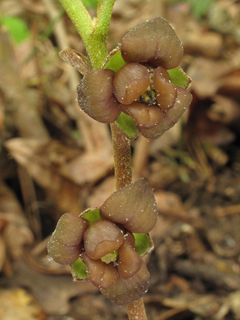
Cressler, Alan
Asimina parviflora
Asimina parviflora (Michx.) Dunal
Smallflower Pawpaw, Small-flower Pawpaw, Dwarf Pawpaw
Annonaceae (Custard-Apple Family)
Synonym(s):
USDA Symbol: ASPA18
USDA Native Status: L48 (N)
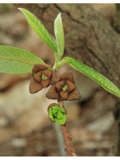
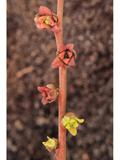
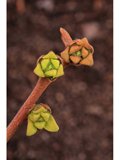
Small-flower or dwarf pawpaw is a 6-8 ft. shrub. Its young shoots and leaves are covered with a rusty down, later becoming smooth. Thick, dark green leaves are heavily scented. Brownish-purple, six-petaled flowers are borne singly in leaf axils before leaf emergence. Cylindric, dark green or brown fruit.
Plant Characteristics
Duration: PerennialHabit: Shrub
Root Type: Tap
Leaf Retention: Deciduous
Leaf Arrangement: Alternate
Leaf Complexity: Simple
Leaf Shape: Obovate
Leaf Venation: Pinnate
Leaf Pubescence: Glabrous
Leaf Margin: Entire
Leaf Apex: Acuminate
Breeding System: Flowers Bisexual
Fruit Type: Berry
Size Notes: Shrub up to 10 feet tall.
Leaf: Alternate, simple, oblong to obovate or oblanceolate, pointed at the tip, tapering to the base, without teeth, smooth at maturity, except for some hairs on the veins on the lower surface, up to 8 inches long.
Flower: Solitary, borne in axils of the leaf scars, maroon, up to 3/4 inch across, usually with a slightly bad odor.
Fruit: Berries greenish yellow at maturity, smooth, up to 3 inches long.
Bloom Information
Bloom Color: PurpleBloom Time: Apr , May
Distribution
USA: AL , AR , FL , GA , LA , MS , NC , SC , TX , VANative Distribution: Coastal plain pine forests from s.e. VA to FL & e. TX
Native Habitat: Dry, piney or oak woods; thickets
Growing Conditions
Light Requirement: Part ShadeSoil Description: Fertile, loose, acid soils.
Conditions Comments: Good understory plant.
Benefit
Conspicuous Flowers: yesPropagation
Description: Plants are easily grown from scarified/stratified seed. Increase by root cuttings, layering, or dormant transplanting.Seed Collection: Fruit often drops from shrub while still hard, green and sour. These fruits can be stored in single layers on trays until pulp begins to soften. Remove seeds and air dry before storing.
Seed Treatment: Follow scarification with a 60-90 day stratification at 41 degrees.
Commercially Avail: yes
National Wetland Indicator Status
| Region: | AGCP | AK | AW | CB | EMP | GP | HI | MW | NCNE | WMVE |
| Status: | FACU | UPL | FAC |
From the National Organizations Directory
According to the species list provided by Affiliate Organizations, this plant is on display at the following locations:Texas Parks and Wildlife Department - Austin, TX
Mt. Cuba Center - Hockessin, DE
Bibliography
Bibref 1620 - Gardening with Native Plants of the South (Reprint Edition) (2009) Wasowski, S. with A. WasowskiSearch More Titles in Bibliography
Additional resources
USDA: Find Asimina parviflora in USDA PlantsFNA: Find Asimina parviflora in the Flora of North America (if available)
Google: Search Google for Asimina parviflora
Metadata
Record Modified: 2014-08-22Research By: TWC Staff