Native Plants

Plant Database
Search for native plants by scientific name, common name or family. If you are not sure what you are looking for, try the Combination Search or our Recommended Species lists.
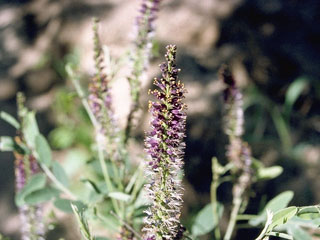
Flaigg, Norman G.
Amorpha canescens
Amorpha canescens Pursh
Leadplant, Leadplant Amorpha, Prairie Shoestring
Fabaceae (Pea Family)
Synonym(s): Amorpha brachycarpa
USDA Symbol: AMCA6
USDA Native Status: L48 (N), CAN (N)
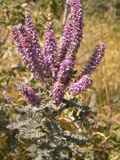
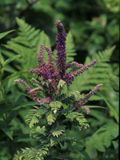
Leadplant is a small, deciduous shrub, 1-3 ft. tall, with tiny, purple flowers grouped together in colorful, terminal spikes. Pinnately compound leaves are covered with short, dense hairs, giving the plant a grayish appearance. This is one of the most conspicuous and characteristic shrubs of the upland prairies. The alternate common name Prairie Shoestring probably refers to the laced-shoestring look of the leaves and roots. It has very deep roots, 4 feet (1.2 m) or deeper.
The genus name, from the Greek amorphos ("formless" or "deformed"), alludes to the fact that the flower, with only a single petal (the banner or standard), is unlike the typical pea flowers of the family.
Plant Characteristics
Duration: PerennialHabit: Shrub
Leaf Retention: Deciduous
Leaf Arrangement: Alternate
Fruit Type: Legume
Size Notes: Up to about 3 feet tall.
Leaf: Green
Fruit: Brown
Bloom Information
Bloom Color: Blue , PurpleBloom Time: Jun , Jul
Distribution
USA: AR , CO , IA , IL , IN , KS , MI , MN , MO , MT , ND , NE , NM , OK , SD , TX , WI , WYCanada: MB , ON , SK
Native Distribution: N. IN & s.e. MI to s. Man. & Carter Co., MT, s.w. to AR, TX & NM
Native Habitat: Well-drained prairies; rocky bluffs; open woodlands
Growing Conditions
Water Use: LowLight Requirement: Sun , Part Shade
Soil Moisture: Dry
CaCO3 Tolerance: High
Soil Description: Well-drained, sandy or rocky soils.
Benefit
Use Ornamental: Showy, Blooms ornamental, Ground cover, Attractive, Fruits ornamentalUse Wildlife: Nectar-insects, Browse, Fruit-mammals, Fruit-deer
Use Food: Native Americans used the leaves for smoking and for making a tea.
Conspicuous Flowers: yes
Interesting Foliage: yes
Value to Beneficial Insects
Special Value to Native BeesThis information was provided by the Pollinator Program at The Xerces Society for Invertebrate Conservation.
Propagation
Description: Scarified seeds may be planted in fall or cold-damp stratified and planted in the spring. Some references say fall sown seed need not be treated. Seedlings take 4 years to reach maturity and flowering.Seed Treatment: Scarification and stratification are necessary if seeds are stored. Scarification can be accomplished with a 10-minute hot water soak.
Commercially Avail: yes
Find Seed or Plants
Find seed sources for this species at the Native Seed Network.
View propagation protocol from Native Plants Network.
Mr. Smarty Plants says
Evergreen privacy hedge and drought-resistant garden
July 21, 2008
I am looking for a hardy evergreen hedge for privacy in Northern Michigan. I have sandy soil. Also am interested in planting a drought garden with mostly sun in same sandy soil.
view the full question and answer
From the National Organizations Directory
According to the species list provided by Affiliate Organizations, this plant is on display at the following locations:Native Seed Network - Corvallis, OR
Bibliography
Bibref 946 - Gardening with Prairie Plants: How to Create Beautiful Native Landscapes (2002) Wasowski, SallyBibref 841 - Native Alternatives to Invasive Plants (2006) Burrell, C. C.
Bibref 1294 - The Midwestern Native Garden: Native Alternatives to Nonnative Flowers and Plants An Illustrated Guide (2011) Adelman, Charlotte and Schwartz, Bernard L.
Search More Titles in Bibliography
Web Reference
Webref 23 - Southwest Environmental Information Network (2009) SEINet - Arizona ChapterAdditional resources
USDA: Find Amorpha canescens in USDA PlantsFNA: Find Amorpha canescens in the Flora of North America (if available)
Google: Search Google for Amorpha canescens
Metadata
Record Modified: 2022-11-11Research By: TWC Staff