Native Plants

Plant Database
Search for native plants by scientific name, common name or family. If you are not sure what you are looking for, try the Combination Search or our Recommended Species lists.
Vick, Albert F. W.
Aesculus californica
Aesculus californica (Spach) Nutt.
California Buckeye
Hippocastanaceae (Horse-Chestnut Family)
Synonym(s):
USDA Symbol: AECA
USDA Native Status: L48 (N)
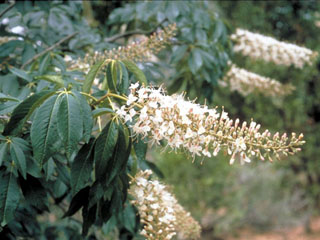
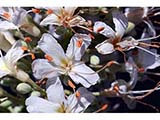
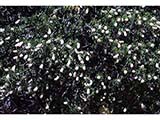
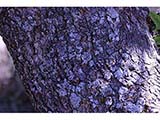
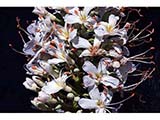
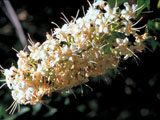
California buckeye is a broad, round, symetrically branching shrub, 10-20 ft. tall, with silvery-gray bark and lustrous, dark-green, palmately compound foliage with 4-7 leaflets. The shrub’s primarily white flowers are fragrant and occur in 4-8 in. panicles. Their orange stamens extend beyond the petals, providing a feathery texture. The pendent, pear-shaped seed capsule is 2-3 in. long. The fall leaves of this deciduous shrub are colorful. Thicket-forming shrub.
Plant Characteristics
Duration: PerennialHabit: Shrub
Leaf Retention: Deciduous
Leaf Arrangement: Opposite
Leaf Complexity: Palmate
Leaf Shape: Lanceolate
Leaf Venation: Pinnate
Leaf Pubescence: Glabrous
Leaf Margin: Dentate
Inflorescence: Panicle
Fruit Type: Capsule
Size Notes: Height 15-40 feet, spread 30-60 feet.
Leaf: Red
Flower: Flower about 1/2 inch across.
Fruit: 1 1/2 to 2 1/2 inches long.
Bloom Information
Bloom Color: White , PinkBloom Time: Apr , May , Jun
Bloom Notes: Pinkish-white blooms.
Distribution
USA: CANative Distribution: Through CA Coast Ranges & Sierra Nevada to Los Angeles & Kern Cos.
Native Habitat: Dry canyons, gullies & wooded slopes
Growing Conditions
Water Use: MediumLight Requirement: Sun , Part Shade
Soil Moisture: Dry
CaCO3 Tolerance: Low
Drought Tolerance: Medium
Soil Description: Poor, dry soils.
Conditions Comments: California buckeye drops its leaves in July or August, but if given ample moisture it will hold them into fall. The shrub does not respond well to humidity and high night temperatures.
Benefit
Use Ornamental: The only native buckeye in the West, this species is sometimes grown as an ornamental.Use Wildlife: Chipmunks and squirrels consume the seeds, but bees are poisoned by the nectar and pollen.
Use Food: California Indians made flour from the poisonous seeds after leaching out the toxic element with boiling water.
Use Other: Ground, untreated seeds were thrown into pools of water to stupefy fish, which then rose to the surface and were easily caught. Wood used by indigenous Californians to make fire drills and hearths.
Warning: Seeds are poisonous to humans if eaten. Sensitivity to a toxin varies with a person’s age, weight, physical condition, and individual susceptibility. Children are most vulnerable because of their curiosity and small size. Toxicity can vary in a plant according to season, the plant’s different parts, and its stage of growth; and plants can absorb toxic substances, such as herbicides, pesticides, and pollutants from the water, air, and soil.
Conspicuous Flowers: yes
Fragrant Flowers: yes
Interesting Foliage: yes
Butterflies and Moths of North America (BAMONA)
|
Sequoia sphinx (Sphinx sequoiae) 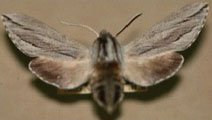 Adult Food Source |
Propagation
Propagation Material: Seeds , Softwood CuttingsDescription: Fall-sown seeds germinate easily without pretreatment.
Seed Collection: Seeds dry and shrivel quickly.
Commercially Avail: yes
Find Seed or Plants
Find seed sources for this species at the Native Seed Network.
View propagation protocol from Native Plants Network.
From the National Organizations Directory
According to the species list provided by Affiliate Organizations, this plant is on display at the following locations:Santa Barbara Botanic Garden - Santa Barbara, CA
Native Seed Network - Corvallis, OR
Bibliography
Bibref 1186 - Field Guide to Moths of Eastern North America (2005) Covell, C.V., Jr.Bibref 1185 - Field Guide to Western Butterflies (Peterson Field Guides) (1999) Opler, P.A. and A.B. Wright
Bibref 1218 - Tending the Wild: Native American Knowledge and the Management of California's Natural Resources (2006) Anderson, M. Kat
Search More Titles in Bibliography
Additional resources
USDA: Find Aesculus californica in USDA PlantsFNA: Find Aesculus californica in the Flora of North America (if available)
Google: Search Google for Aesculus californica
Metadata
Record Modified: 2008-10-18Research By: TWC Staff