Native Plants
Q. Who is Mr. Smarty Plants?
A: There are those who suspect Wildflower Center volunteers are the culpable and capable culprits. Yet, others think staff members play some, albeit small, role. You can torture us with your plant questions, but we will never reveal the Green Guru's secret identity.
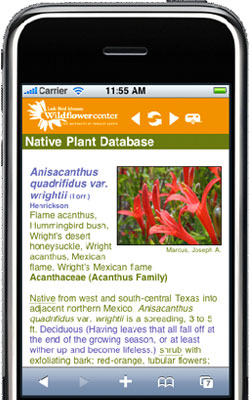
Did you know you can access the Native Plant Information Network with your web-enabled smartphone?

Ask Mr. Smarty Plants
Ask Mr. Smarty Plants is a free service provided by the staff and volunteers at the Lady Bird Johnson Wildflower Center.

rate this answer

Monday - February 11, 2013
From: Weslaco, TX
Region: Southwest
Topic: Pruning, Shrubs
Title: Trimming Butterfly Plants
Answered by: Anne Van Nest
QUESTION:
I am looking for detailed information on trimming common butterfly plants: crucita, cenizo, sweet-stem, whitebrush, Mexican trixis, skeleton-leaf goldeneye, white plumbago, turk's cap, desert lantana and Texas lantana. I am creating a guide for volunteer gardeners at Estero Llano Grande State Park in South Texas. I need to know when and how to trim these plants. Thank you for your help.ANSWER:
Congratulations on having a collection of butterfly attracting shrubs at the Estero Llano Grande State Park and your foresight in creating a cultural guide for the care of these plants.
While there are some general pruning “rules” ultimately you will probably find that each plant will have to be treated individually and have slightly different times when pruning is best done (and differing instruction on what and how much needs to be pruned). After a few seasons and as the volunteer gardeners get to know the plants, it will become apparent that even the rules and guidebook have to be modified at times because the weather (mainly), an unusual fungus attack, or hungry rodents don’t adhere to the rules. So put as much as you can into your guidebook but be aware that it will need to be updated every couple of years!
The first place to look for tips and clues to pruning information about each plant is the Native Plant Database.
Be on the lookout for general information like “Dies back to the roots in hard winters.” (Chromolaena odorata).
Also very important is the Blooming Time section such as “August to October“ (Chromolaena odorata) as pruning a shrub hard (or even lightly trimming the tips of the branches) just before the blooming time could remove all the bloom. It is best to prune after the blooming time or well before it starts to bloom.
Also check the Growing Conditions comments section for each plant for comments such as “Because of leggy growth habit, it should be cut back once per year. Dies back to the roots in hard winters. Can be trained as an espalier.” (Chromolaena odorata)
The Propagation/Maintenance section is also a great place for important pruning information such as “Prune plants to keep compact. Cultivated cenizos tend to become leggier with fewer blooms than in nature. Tip prune to increase density.” (Leucophyllum frutescens)
Lastly, the Benefit/Use Wildlife section has information about whether various wildlife feeds on the seeds or fruit and therefore should be left on for habitat sustainability. Plants with notes such as “seeds for granivorous birds” should have pruning delayed so that the seeds are left as wildlife food. (Chromolaena odorata)
If you can’t find specific information about any of your butterfly shrubs, there are some general principles about when to prune flowering plants that relate to when they bloom. Here’s a previous Mr. Smarty Plants answer about pruning native plants:
For spring-flowering bushes or trees, it is best to prune after they have flowered in the spring since the flower buds are setting in the fall and winter pruning will remove them. Your safest time for pruning summer flowering bushes or trees is in the winter (late November through early February). However, if your plants have gotten too bushy or rangy, you could probably do some judicious pruning almost anytime, being careful not to remove flower buds or too much of the plant at one time. The bottom line is that your pruning strategy pretty much depends on the plant.
Two other places to look for general pruning techniques information is the Texas A&M AgriLife Extension website article, Proper Pruning Techniques and the Pruning Native Plants article from the California Native Plant Society.
Below are the links to the Wildflower Center Native Plants Database for the plants you are researching:
- Chromolaena odorata (crucita or blue mistflower)
- Leucophyllum frutescens (cenizo or Texas sage)
- Aloysia macrostachya (Rio Grande beebush or sweet-stem)
- Aloysia gratissima (whitebrush)
- Trixis inula (Mexican trixis or tropical threefold)
- Viguiera stenologa (skeleton-leaf goldeneye)
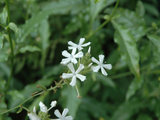
- Plumbago scandens (Mexican plumbago or summer snow plumbago)
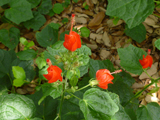
- Malvaviscus arboreus var. drummondii (turk’s cap)
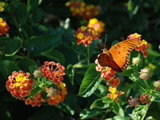
- Lantana achyranthifolia (brushland shrubverbena or desert lantana)
- Lantana urticoides (Texas lantana)
From the Image Gallery




More Shrubs Questions
Plants looking similar to Camellia sinensis in Venezuela
June 30, 2008 - Is there another plant that looks similar to the tea plant? I need to do a photoshoot of a tea plantation, but can´t really get to one, so I was wondering if there were other plants that at least look...
view the full question and answer
Low cost, low maintenance, water tolerants native plants for New Jersey
February 25, 2006 - I am planning a bed around my deck which will include shrubs and flowers. I am looking for plants that require a lot of water due to the wet soil conditions and poor drainage in my yard. Do you have...
view the full question and answer
Tiny red bugs on Mountain Laurel from San Antonio TX
April 02, 2014 - Hordes of solid bright red tiny bugs are all over the bark of my Mountain Laurels. The infestation has me very worried. How can I deal with them? Thank you in advance for helping solve this problem.
view the full question and answer
Pruning smooth azalea in NJ
July 12, 2011 - I have a Smooth Azalea growing in my woods. It was verified by the Master Gardeners of Burlington County New Jersey. It's 12 feet tall and lanky. Can it be trimmed in hopes of thickening up? If s...
view the full question and answer
Evergreen Shrubs for the Houston area
March 24, 2011 - Hello Mr. Smarty Plants,
I live in the Houston area and I am looking for an evergreen native shrub (no more than 7 feet tall at maturity) for two locations - one would be in full sun and the other ...
view the full question and answer
| Support the Wildflower Center by Donating Online or Becoming a Member today. |