Native Plants

Q. Who is Mr. Smarty Plants?
A: There are those who suspect Wildflower Center volunteers are the culpable and capable culprits. Yet, others think staff members play some, albeit small, role. You can torture us with your plant questions, but we will never reveal the Green Guru's secret identity.
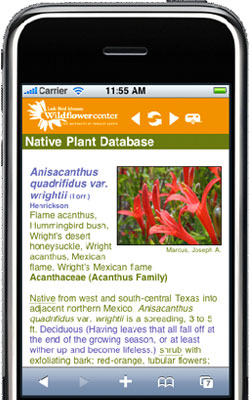
Did you know you can access the Native Plant Information Network with your web-enabled smartphone?

Ask Mr. Smarty Plants
Ask Mr. Smarty Plants is a free service provided by the staff and volunteers at the Lady Bird Johnson Wildflower Center.

rate this answer

Monday - March 26, 2012
From: Austin, TX
Region: Southwest
Topic: Diseases and Disorders, Trees
Title: Hypoxylon Canker removal in Austin TX
Answered by: Brigid & Larry Larson
QUESTION:
I have several oaks that appear to have been killed by Hypoxylon atropunctatum from last summer's drought. Is it safe to cut them down in March or does that risk spreading Oak Wilt too. Should I let them sit there dead until summer?ANSWER:
Mr Smarty Plants offers his condolences on the loss of your Oaks. That always hurts.
Your question evoked considerable discussion amongst the experts at the Ladybird Johnson Willdflower Center. It's clear the trees need to be removed, but there were good arguments for either "right now" or "wait until next winter". A general concensus clearly recommended that you employ the services of a Texas Oak Wilt Certified Arborist and get a expert diagnosis of the trees condition and recommendation for how to go on.
The argument for waiting is the one you implied. When considering Oak Wilt, it’s just a bit late to be cutting trees down. The standing advice is to prune from December into early February. The risk you induce by waiting is that the Hypoxylon Canker that is there may infect other trees. You can have hope that this year this risk is minimal as the references linked below imply that healthy, well watered trees are not all that susceptable to the canker. There is also a risk, in truly advanced cases, that the tree wood will be weaked by the fungus and drop limbs or fall.
The argument for "cutting now" is that you do have Hypoxylon Canker there. Leaving the trees stand until summer or later is leaving a viable source of the fungal infection in place. The Florida Forest Service describes the fungal growth process. In the spring or early summer, masses of spores called conidia are produced on the surface. Later in the summer or fall, after the powdery conidia are gone, the fungal stromata thicken and produce another type of spores. These are the infective ascospores which are present later in the summer or fall. The Florida Forest Service recommends removal of the tree.
The Oklahoma State Extension recommended “In a home setting, individual trees that have more than 15% of the crown area infected should be cut to ground level and burned. No stump should be left because stroma development has been observed even on very small stumps.” The Texas Forest Service also has a publication describing the course of the infection, and there are several publications from TAMU including a 3-part fact-sheet. This one addresses managing Hypoxylon canker.
It makes sense to remove trees that can serve as viable sources of continuing infection, but at the same time one should be concerned about Oak Wilt as that is a continuing concern for the other trees. One should take extreme care that the neighboring Oak trees are not damaged by the removal and follow the expected precautions following the work. This includes tool cleaning, not storing infected wood on the property, and all pruning cuts or other wounds, including freshly-cut stumps and damaged surface roots, should be treated immediately with a wound or latex paint to prevent exposure to contaminated insect vectors. I will repeat the recommendation of consulting a certified Oak Wilt Arborist!
Mr Smarty Plants has produced several answers concerning Hypoxylon Canker, most of them involve determining that this is the source of illness. There are several other good links in these answers though.
More Trees Questions
Food Allergy to Beautyberry or Persimmon?
October 22, 2015 - I think I might have a food allergy to Beautyberry or American Persimmon, eaten Saturday at the North Carolina Great Dismal park. These were the only strange foods recently, though I've had persimmo...
view the full question and answer
Bald cypress with chlorosis in Texas
June 15, 2009 - I have a 6' tall Bald Cypress planted 2 years ago which just this year appears to be suffering from chlorosis. The tree was bought from a chain store. It receives some drainage water from my washin...
view the full question and answer
Grey Goo Coming from red Oak in Manchaca TX
May 13, 2013 - I have a large Red Oak in my yard that appears to be weeping some sort of grey goo from parts of the trunk. What is this goo and do I need to treat it and if so how? I'm happy to come by the Wildflow...
view the full question and answer
Problem with Arizona Ash in Leander TX
March 10, 2011 - What would make my otherwise healthy Arizona Ash tree, that was doing so well last year, only bud out on just one side?
view the full question and answer
Distance apart to plant oaks in Denton TX
August 26, 2009 - How far apart should I plant Pin Oaks and Shumard Red Oaks in our yard? All around us are native oaks, but our backyard has none. I want to create a "forest" that looks like they are native, but n...
view the full question and answer
| Support the Wildflower Center by Donating Online or Becoming a Member today. |