Native Plants

Q. Who is Mr. Smarty Plants?
A: There are those who suspect Wildflower Center volunteers are the culpable and capable culprits. Yet, others think staff members play some, albeit small, role. You can torture us with your plant questions, but we will never reveal the Green Guru's secret identity.
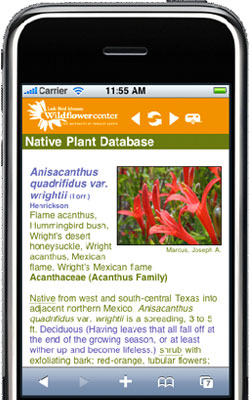
Did you know you can access the Native Plant Information Network with your web-enabled smartphone?

Ask Mr. Smarty Plants
Ask Mr. Smarty Plants is a free service provided by the staff and volunteers at the Lady Bird Johnson Wildflower Center.

rate this answer

Saturday - June 24, 2006
From: Austin, TX
Region: Southwest
Topic: Edible Plants
Title: Bitterness in cucumbers
Answered by: Nan Hampton
QUESTION:
Bitter Cukes: We have a question about Burpless Burpee cucumbers. We've planted them with success several years in a row in our Austin backyard. This year, although the cucumbers look fine, they are extremely bitter tasting and not fit to eat. Could fertilizer be the culprit?ANSWER:
There is agreement on what compounds cause the bitterness in cucumbers. They are cucurbitacin B and cucurbitacin C and these occur in all parts of the plant—leaves, stem, roots—but rarely in the fruit. Another compound produced by the cucumber, an enzyme called elaterase, modifies the cucurbitacins to reduce their bitter flavor. The variable amount of bitterness found from year to year or from plant to plant or even from fruit to fruit on the same plant is thought to depend on the activity of the elaterase. Environmental conditions—temperature or moisture, for instance—may affect the amount of elaterase produced. However, there is no clear agreement on exactly what those environmental factors are. Sources in the northwest and in California cite cool temperatures as being a major cause for the bitterness; whereas, Texas A&M PlantAnswers implicates hot temperatures. Temperature stress might be a better description of the cause of bitterness. There is some evidence that water stress could also be responsible. One thing that you might try is being sure that your plants are well watered. This could result in the fruits that are developing now being less bitter.
One solution you may have is to peel and trim your cucumbers extensively before you eat them. The stem end typically is bitterer than the flower end of the fruit. Also, right under the skin is usually bitterer. By careful peeling away of the skin and some of the outer flesh and removing more of the stem end of the fruit you may be able to enjoy the ones you have.
More Edible Plants Questions
Jersalem artichoke as a medicinal herb
February 05, 2011 - I am having trouble with high cholesterol and coming up on being borderline diabetic and I am overweight. I know that Jerusalum Artichoke helps lower blood sugar. Am into herbs and J.A. is hard to l...
view the full question and answer
Edible/medicinal plants in Suffolk County, NY
August 19, 2010 - Which types of edible/medicinal plants are available in Suffolk County (Long Island NY)? Is there a place I can find a list with information about what they look like, where they can be found and what...
view the full question and answer
Plants for floodplain in Fairfield, New Jersey
March 21, 2010 - I have an easy question for you... I hope... We just moved into the floodplains of NJ in Fairfield and are interested in some plants. We would like to know what plants are best suited to grow in flood...
view the full question and answer
Huckleberries and blueberries from Vancouver WA
April 14, 2013 - Can you plant a blueberry next to a huckleberry?
view the full question and answer
Smarty Plants on Texas cherry tomato
April 24, 2005 - We just bought 2 Texas cherry tomato plants at the plant sale. We have to container garden in a walled courtyard due to deer. (Would deer be attracted to the plants in a garden with herbs and high de...
view the full question and answer
| Support the Wildflower Center by Donating Online or Becoming a Member today. |