Native Plants
Q. Who is Mr. Smarty Plants?
A: There are those who suspect Wildflower Center volunteers are the culpable and capable culprits. Yet, others think staff members play some, albeit small, role. You can torture us with your plant questions, but we will never reveal the Green Guru's secret identity.
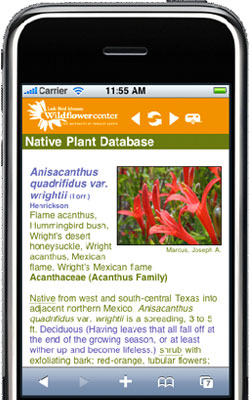
Did you know you can access the Native Plant Information Network with your web-enabled smartphone?

Ask Mr. Smarty Plants
Ask Mr. Smarty Plants is a free service provided by the staff and volunteers at the Lady Bird Johnson Wildflower Center.

rate this answer

Sunday - April 03, 2011
From: Franklin, CT
Region: Northeast
Topic: Grasses or Grass-like, Herbs/Forbs, Shrubs, Trees
Title: Re-landscaping neglected garden in Franklin CT
Answered by: Barbara Medford
QUESTION:
I am starting from scratch in a yard that has no planting beds or, for that matter, plants at all. House was vacant for quite some time, grass was three feet tall when we moved in. I would like to plant water wise, Xeriscape landscaping, using mostly flowering perennials, also non flower bushes and plants for accent and some native grasses that would work well in our area. Front yard is shaded, back yard, partial shade. Small areas of mostly sunny where the major lawn area is. We would also like a water wise "lawn" that doesn't brown out in late summer if there is such a possibility. Thank youANSWER:
The first thing we want to suggest is that you spend some time with a landscaping consultant. If you go to our National Supplier's Directory and type your town and state in the "Enter Search Location" box you will get a list of native plant nurseries, seed companies and landscaping and environmental consultants that deal with native plants. Remember that the Lady Bird Johnson Wildflower Center only recommends plants that are native not only to North America but to the areas in which those plants grow natively. The reason for that policy is that plants native to an area are already accustomed to the rainfall, temperatures and soils on an area by centuries of experience growing there. If you just go to a nursery and buy, willy nilly, whatever plant catches your eye, you are liable to spend a lot of money, hard work, and valuable resources such as water and fertilizer, on a plant that is not destined to do well there and may die. New London County, in the southeast corner of Connecticut, is in USDA Hardiness Zone with average annual minimum temperatures of -10 to -5 deg.
We recommend that you consult with a professional, because they will know, first of all, what has to be done to remove the undesirable growing plants that are already there, what the soil is and whether it needs enriching, as well as what size root systems will develop from some of your larger plants and trees. We are going to introduce you to our Native Plant Database so you can express the kind of things you want to the consultant (if you get one) or the nursery. You may think we are dodging our responsibility by not giving you a specific lists of plants, but we don't know if you want a shrub over there, and how much shade it is going to have to tolerate in that corner. We don't even know if you have that corner. You will make informed decisions with the backup of the Wildflower Center research and study. The next obstacle you will have is finding the native plants that you want in nurseries. Back to the National Supplliers Directory for the names of nurseries specializing in native plants. All have contact information and/or websites so you find out if they have what you want.
We are going to walk you through selecting a tree, a shrub, a herbaceous blooming plant and a grass from our database, to help you understand how to search for what you want and what you can find out from our webpages. First, go to Recommended Species, and click on Connecticut on the map. This will accustom you to search on your own for just the right plant, and finding the information you need to make it just the right plant. First, on the Recommended Species for Connecticut page, click on "tree" for the General Appearance. If you know it will be in part shade or full sun or whatever, indicate that under Light Requirements. On each of the types of plants we are going to use as examples, follow the plant link to the page on that plant.
42 trees native to Connecticut: we chose Ilex opaca (American holly) - evergreen, to 60 ft. tall
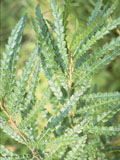
26 shrubs: Comptonia peregrina (Sweet fern), 3 to 6 ft., part shade
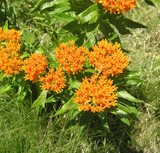
131 herbaceous blooming plants: Asclepias tuberosa (Butterflyweed) - 2 ft. perennial, blooms orange, sun or part shade
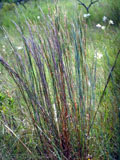
3 grasses: Schizachyrium scoparium (Little bluestem) - 2 ft. tall, perennial, sun, part shade
From our Native Plant Image Gallery:

More Shrubs Questions
Native plants/shrubs to plant under sycamore and redbud trees
September 03, 2009 - I want to eventually get rid of our front lawn. We have a 40 year old sycamore tree and a young but well established redbud tree in the front yard. What are some good plants/shrubs to plant under the ...
view the full question and answer
Shrub to hide gas line and water faucet from Stamford CT
May 23, 2013 - I have a small garden ( 8'x10') in front of my house in southwestern Connecticut which faces north. It gets very limited sun and the eave hangs over it. I am looking for a shrub to plant up against ...
view the full question and answer
Is cenizo (Leucophyllum frutescens) edible?
December 21, 2012 - I found a post here about cenizo leaves being used for tea, but I'm wondering if the leaves of the cenizo are edible? I have found many recipes for 'brown butter sage' leaves (sauteed often with on...
view the full question and answer
Native flower bed with part sun
December 05, 2008 - I have recently put in three small flower beds and replaced the hard clay with decent dirt. The site is shaded in the AM but mostly sun in the PM. I would like to plant natives - what can you recommen...
view the full question and answer
Will wax myrtle (Morella cerifera) grow in Roswell NM?
September 29, 2011 - We live in Roswell, NM. Will a wax myrtle tree live in our climate and soil?
view the full question and answer
| Support the Wildflower Center by Donating Online or Becoming a Member today. |