Native Plants

Q. Who is Mr. Smarty Plants?
A: There are those who suspect Wildflower Center volunteers are the culpable and capable culprits. Yet, others think staff members play some, albeit small, role. You can torture us with your plant questions, but we will never reveal the Green Guru's secret identity.
Did you know you can access the Native Plant Information Network with your web-enabled smartphone?

Ask Mr. Smarty Plants
Ask Mr. Smarty Plants is a free service provided by the staff and volunteers at the Lady Bird Johnson Wildflower Center.

rate this answer

Tuesday - February 15, 2011
From: Dripping Springs, TX
Region: Select Region
Topic: General Botany, Wildflowers
Title: Will recent freezes delay wildflowers from Dripping Springs TX
Answered by: Barbara Medford
QUESTION:
What effect will the recent freezing temperatures have on the Texas Hill Country Wildflowers? Will it delay blooming? Thank you!ANSWER:
To prepare the answer to your question, we looked back at previous Mr. Smarty Plants' answers. Did you know you could do that, and often find the exact answer you are looking for? Go to "Ask "Mr. Smarty Plants" on our website wildflower.org under the tab for "Explore Plants" and search on "bluebonnets." We did that this morning and there were 197 possibilities. Scanning through them, we found basically the same question as yours at about the same time of year, for the last several years. Sometimes they were concerned about too much/too little rain, cold temperatures, hot temperatures, etc., etc. The gist of these answers:
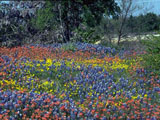
Texas wildflowers are adapted to living in the capricious weather of Texas-the long droughts, the flooding rains, the heat and sudden drops in temperature. They adapt by dropping their seeds on the ground in the Fall, the gentlest time of year for planting seeds. Then, they wait in that soil until warmth, rain and other conditions tell them it's time to germinate. This could be 60 days after the seeds drop, or 5 years. They will endure insect attacks, loss of fertility, even rotting but, because of the great number of seeds produced every year, some will survive to germinate, grow, bloom and make more seeds to continue the species. If there are blooming delays, it won't be for more than a few days. In fact, there are already bluebonnets in bloom on the Lady Bird Johnson Wildflower Grounds, see picture. That picture was taken on January 19.
The tops of the rosettes on your bluebonnets may have gotten a little nipped, but they are growing with their roots in the nice warm soil, which doesn't freeze. Like other native flowers, they have learned to keep their heads down until worst threat of freezing weather is past. The first imperative of any organism is to produce more of itself. Those plants will be working hard to bloom, seed, cast those seeds and reproduce.
From the Image Gallery
More General Botany Questions
Can plants in the same genus cross-pollinate?
March 27, 2009 - Can you cross-pollinate plants from the same genus?
view the full question and answer
Definition of a weed
April 22, 2003 - What is your definition of a weed?
view the full question and answer
Where do snake herb and skeleton-leaf goldeneye get their names?
October 05, 2014 - Dear Mr. Smarty Plants,
Where does snake herb, and skeleton leaf goldeneye get their names from? Thank you.
view the full question and answer
Fragrance in fragrant plants.
August 21, 2013 - Why are some flowering plants known for fragrance not fragrant or as fragrant? Is it a nutrition deficiency or just the plant?
view the full question and answer
Source for records of Pleistocene flora of Central Texas
December 16, 2013 - Part of your answer to a question from October 12, 2010 is "..moreover, the evidence goes even further back than the 1800s. Studies of Pleistocene deposits from Central Texas showed ancestral cedar p...
view the full question and answer
| Support the Wildflower Center by Donating Online or Becoming a Member today. |