Native Plants

Q. Who is Mr. Smarty Plants?
A: There are those who suspect Wildflower Center volunteers are the culpable and capable culprits. Yet, others think staff members play some, albeit small, role. You can torture us with your plant questions, but we will never reveal the Green Guru's secret identity.
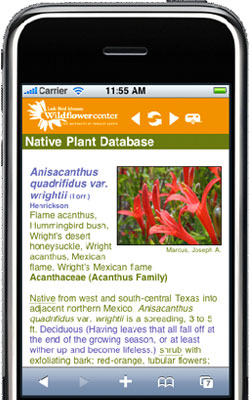
Did you know you can access the Native Plant Information Network with your web-enabled smartphone?

Ask Mr. Smarty Plants
Ask Mr. Smarty Plants is a free service provided by the staff and volunteers at the Lady Bird Johnson Wildflower Center.

rate this answer

Thursday - May 27, 2010
From: Tucson , AZ
Region: Southwest
Topic: Non-Natives
Title: Failure to thrive of non-native Confederate Jasmine in Tucson AZ
Answered by: Barbara Medford
QUESTION:
My Star/Confederate Jasmine, a 30 foot long wall of it, for over 5 years now has one side of it losing leaves. I seem to remember it did this one other summer, but came back in?? What could be the problem. I have inspected it for mites, cant see any, it gets ample water, the other side looks fine. I am perplexed. I don't want to rip out any of the full wall of this fragrant plant. Can you tell me some things it might be? We have clay here after a foot or so, but that has never bothered it before. We also have those awful Japanese beetles here, would they invade the roots of this? Thanks!ANSWER:
This article, Tracelospermum jasminoides, from Floridata, will tell you it is not a true Jasmine and, in spite of its name is not native to North America but to China. The Lady Bird Johnson Wildflower Center is committed to the growth, protection and propagation of plants native not only to North America but to the area in which it is being grown, so this plant is out of our range of expertise and not in our Native Plant Database. We have heard that it should be fertilized with a balanced fertilizer for acid-loving plants, especially if your soil is alkaline, which it probably is in Tucson. As for the Japanese beetle, that is also out of our line, as we are gardeners and botanists, not entomologists. We found one article about it from the USDA Animal and Plant Inpection Service. According to the Floridata site, this plant is hardy from USDA Hardiness Zones 8 to 10, which should be all right for Tucson, and that it does not have any serious pests. Since beetles can't read, we would suggest you contact the Arizona Cooperative Extension Office for Pima County to see if there is some sort of infestation. It seems unlikely that beetles or some other pest would only work on one side of the plant and ignore the other.More Non-Natives Questions
Non-native gardenias in Southampton Ontario
July 31, 2012 - I purchased 3 gardenias this year for the garden. Now I'm told that I can't leave them out all year round here in mid/western Ontario.
Is this true, and if so, how do I keep them over the winter i...
view the full question and answer
Alternative for Pittosporum limelight
March 22, 2012 - Is it ok to plant a Pittosporum limelight by pool? Don't want bees! Needs to be 6 feet. Thanks.
view the full question and answer
Mexican Lime Turning Yellow
March 25, 2015 - What causes moderate yellowing of 40% of the leaves of an 8 year old Mexican Lime Tree that is booming and blooming right now with lots of thick new growth? I used a general garden fertilizer a few ...
view the full question and answer
New house plant in pot in Chevy Chase MD
May 07, 2010 - Is it possible for one house plant to eventually die in the pot while a completely different plant grows in its place? The new plant looks similar to the potted plant next to it but it is not quite t...
view the full question and answer
Damage to plants after sudden freeze in Redway CA
January 02, 2010 - I live on the North Coast of California near "The Avenue of the Giants" and Redwoods State Park along the Eel River. We recently have had below freezing weather, constant rain and even snow! I have...
view the full question and answer
| Support the Wildflower Center by Donating Online or Becoming a Member today. |