Native Plants
Q. Who is Mr. Smarty Plants?
A: There are those who suspect Wildflower Center volunteers are the culpable and capable culprits. Yet, others think staff members play some, albeit small, role. You can torture us with your plant questions, but we will never reveal the Green Guru's secret identity.
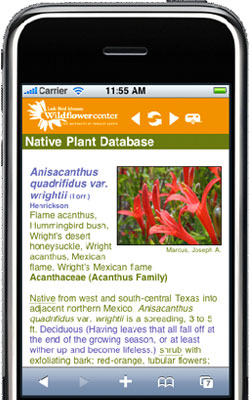
Did you know you can access the Native Plant Information Network with your web-enabled smartphone?

Ask Mr. Smarty Plants
Ask Mr. Smarty Plants is a free service provided by the staff and volunteers at the Lady Bird Johnson Wildflower Center.

rate this answer

Friday - May 07, 2010
From: Pearland, TX
Region: Southwest
Topic: Diseases and Disorders
Title: Discouraging rabbit snacking in the garden in Pearland TX
Answered by: Barbara Medford
QUESTION:
I planted winecups and pink evening primrose in my new landscape beds amongst other native grasses and shrubs. Rabbits have been eating these wildflowers down to the ground. I want to attract wildlife, but I also prefer flowers to green stems. Are there any good ways to discourage the rabbits from eating my native flowers.ANSWER:
We Googled "keeping rabbits out of the garden," and got all kinds of suggestions, some of them fairly sensible, some of them not too attractive and a few flat disgusting. Most of the suggestions included chicken wire fences at least 2 ft tall, which we didn't think would look too good around a flower garden. There were ideas for sprinkling blood meal or bone meal or (ick) fox urine around the beds. Human hair was supposed to be a deterrent, and will eventually decompose into the soil. Planting onions in front of the plants was brought up, as well as moth balls in a mesh bag. A few people recommended a dog, even fewer a gun. Peter Rabbit they are not, and they leave little piles of rabbit poop everywhere. We don't have a rabbit-resistant list for native plants. We looked at "rabbit resistant plants" on the Internet; most of the sites were area-specific, meaning we don't think a list of agaves and yuccas that deer and rabbits don't like (from Arizona) would do you much good with your winecups and pink evening primroses. We found one from Pennsylvania-Penn State Cooperative Extension Rabbit Resistant Plants by Laurie Bishow, Penn State Master Gardener. These lists are not all going to be native plants, but will help as a guide as you try to select plants.
Recommendation: Do the same thing we did, and try to find some solutions that work for you, and are pleasing to the eye for a wildflower garden, and if that doesn't work, plant some cactus.
More Diseases and Disorders Questions
Wax myrtle problems from Driftwood TX
September 04, 2010 - We planted 27 wax myrtles on the perimeter of our property last year and were diligent about watering them throughout the drought. They are in very rocky soil (we had to use a jackhammer to dig the ho...
view the full question and answer
Something killing evergreens on Long Island from Baldwin NY
June 06, 2011 - What seems to be killing so many of the evergreens on Long Island - see more and more dying each day - doesn't seem to be a rhyme or reason - can it be helped? Many thanks.
view the full question and answer
Yellowing of fronds on Sago Palm
March 27, 2007 - Our Sago Palm now has all yellow fronds from the Winter frosts.
Should they be cut off? Will the plant grow new fronds from the bottom to replace the ugly looking ones that are there? And why do I se...
view the full question and answer
Loss of leaves from globe willows in Utah
July 26, 2008 - I have four globe willows that have been in my back yard for the past 6 years. For the past month they have been losing their leaves from the bottom up. We had aphids in some of our other trees and ...
view the full question and answer
Brush cleaning fluid used under non- native Loropetalum in Roswell GA
September 25, 2010 - My painter cleaned their brushes under one of my Black Diamond Lorpetulum and it is wilting "BAD." Is there anything I can do?
view the full question and answer
| Support the Wildflower Center by Donating Online or Becoming a Member today. |