Native Plants

Q. Who is Mr. Smarty Plants?
A: There are those who suspect Wildflower Center volunteers are the culpable and capable culprits. Yet, others think staff members play some, albeit small, role. You can torture us with your plant questions, but we will never reveal the Green Guru's secret identity.
Did you know you can access the Native Plant Information Network with your web-enabled smartphone?

Ask Mr. Smarty Plants
Ask Mr. Smarty Plants is a free service provided by the staff and volunteers at the Lady Bird Johnson Wildflower Center.

rate this answer

Saturday - January 30, 2010
From: Cedar Park, TX
Region: Southwest
Topic: Non-Natives
Title: Will drought-stricken non-native St. Augustine come back in Cedar Park TX
Answered by: Barbara Medford
QUESTION:
I recently bought a new house but the grass in the yard looked completely dead (bought house in Nov) even though the neighbor's grass was still green. The previous owner stopped watering the grass (even though he had a sprinkler system). Will the grass come back (St Augustine)? What can I do to help it. I can't afford to re-sod the whole yard. I live in Cedar Park. Thanks!ANSWER:
Since St. Augustine is not native to North America, it is out of the area of expertise of the Lady Bird Johnson Wildflower Center. Both because of economic reasons and watering restrictions last summer, a lot of people are probably facing the same problem. If you live in a Homeowner's Association requiring a closely mowed lawn and/or have a lot of shade on your lawn, you may be stuck with the St. Augustine. Now that we have had some rain, and assuming you will water when there is no rain, the grass should come back. It will, however, be heavily invaded by a number of weeds. The weeds probably ARE native to the Central Texas area, and will be more likely to survive than the grass, which needs quite a lot of water.
We understand your not wishing to re-sod all at once, but we would like to make some alternative suggestions. If you have some sunny areas in your lawn, there are native grasses that can actually be mowed and are acceptable to most Homeowner's Associations. See our How-To Articles on Native Lawns and Buffalograss. You could begin gradually replacing the St. Augustine with a more appropriate native plant, as time and resources allowed. You will still have to be vigilant about weeds, but you won't need to do all the fertilizing and watering that St. Augustine requires. Over time, you could completely replace the non-native plants with natives more appropriate for your environment. If you have areas of heavy shade because of trees, we would even suggest removing the lawn material there and putting down a good quality shredded bark mulch. This is attractive, requires no watering and helps to keep weeds down. As it decomposes it will add nourishment to the tree roots beneath it. Of course, it will need to be replenished from time to time, but likely only once or twice a year.
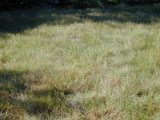
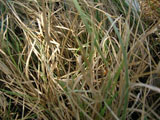
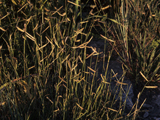
From our Native Plant Image Gallery:
More Non-Natives Questions
Shy blooming non-native Crape Myrtle, in Littlestown Pennsylvania
July 25, 2011 - My Crape myrtle has been planted about three years, and reached a height of about 4'. It blooms late July and for the past two years, has only had one or two blooms on it. I have a lot of buds whic...
view the full question and answer
Brown spots in St. Augustine grass
July 05, 2008 - Mr. Smarty Plants, My husband and I are in the Air Force and were recently moved to Cibolo Texas. We built a home and hired a landscaper to finish the yard May 07 (with irrigation system). We laid d...
view the full question and answer
Will a non-native smoke tree, Cotinus coggygria, be harmful in Utah
May 08, 2009 - Can one plant a smoke tree in Utah without causing and harm to the environment? I'm worried that this plant may be a species that could cause a problem since I believe it is not a native plant.
view the full question and answer
Sprout from a non-native sago palm in Poinciana FL
October 16, 2013 - I have two mature (10 years old)sago palms. One of them sprouted a new "head' at the top of the trunk. It is competing with the original one. It is not a pup coming from the root area. Can I cut it ...
view the full question and answer
Non-native jade plants and spider plants beneath Mayberry tree in Bay Point CA
October 15, 2013 - I have a fruitless Mayberry in my back yard that's about 50/50' can I plant jade and spider plants under it? The tree is very healthy.
view the full question and answer
| Support the Wildflower Center by Donating Online or Becoming a Member today. |