Native Plants

Q. Who is Mr. Smarty Plants?
A: There are those who suspect Wildflower Center volunteers are the culpable and capable culprits. Yet, others think staff members play some, albeit small, role. You can torture us with your plant questions, but we will never reveal the Green Guru's secret identity.
Did you know you can access the Native Plant Information Network with your web-enabled smartphone?

Ask Mr. Smarty Plants
Ask Mr. Smarty Plants is a free service provided by the staff and volunteers at the Lady Bird Johnson Wildflower Center.

rate this answer

Saturday - September 19, 2009
From: Dallas, TX
Region: Southwest
Topic: Transplants, Groundcovers
Title: Horseherb for ground cover in Dallas
Answered by: Barbara Medford
QUESTION:
When considering horseherb as a ground cover for a large area; are there disadvantages to sowing seed versus planting established plants? If not, what time of year is best to sow horseherb?ANSWER:
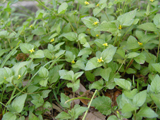
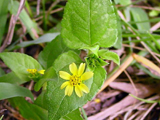
According to our Native Plant Database, Calyptocarpus vialis (straggler daisy), also known as horseherb, is easy to propagate from fresh seed sown without treatment as well as being easy to divide and relocate. It is sometimes regarded as a weed, and you may have neighbors who would be delighted to have you pull it out of their flowerbeds and take it away. It is only beginning to be regarded as a good groundcover, sometimes available from nurseries, but we don't think seed is commercially available. Our personal preference in your case would be transplanting by root division. This time of year would be good, no intense heat and it will be quite a while, if ever, before it gets very cold in the Dallas area.
Horseherb is semi-evergreen, remaining green and blooming year-round in temperate climates. It can go dormant in cold winters. It ordinarily blooms yellow March to November, has low water use, and can do well in sun, part shade or shade. If you have it in the shade of large deciduous trees, you should be careful not to let it get smothered in fallen leaves. Rake them out and put them in your compost pile, and you will be rewarded by green foliage and little daisy-like blooms.
If you can't find a supply of transplants in the neighborhood, go to our Native Plant Suppliers section, type your town and state in the "Enter Search Location" and you will get a list of native plant nurseries, seed companies and landscape contractors in your general area. They have contact information and you can get in touch with them looking for seed or bedding plants.
In terms of disadvantages of sowing seed vs. root propagation, the only one we can think of is that you will have plants in place right away with transplants, but will have to wait until the seed sprouts; meanwhile, other plants that you don't want may be sprouting, too. If you can obtain seed, late Fall is probably the best time. If you are planting on a slope, you might lose a lot of seed in Fall rains, in which case the transplants would still be the best alternative.
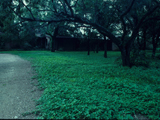
From our Native Plant Image Gallery:

More Transplants Questions
When and how to transplant a Texas persimmon
January 02, 2009 - When and how should I transplant a 12' Texas persimmon? How much root ball do I need to get?
view the full question and answer
Want a source for Mexican redbud in Houston, TX
October 04, 2010 - I live in west Houston and would like to purchase and plant a Mexican redbud in my yard. I have Googled to find one and also searched the Growit site without success. Where can I find one in Texas? I ...
view the full question and answer
Laurel oak tree not leafing out in Pasadena TX
April 13, 2010 - Hurricane Ike blew down our red bud in the backyard. Had a large 25' laurel oak planted early March 2010. When it was put in the ground, the leaves were on it, but they were all brown and dried. T...
view the full question and answer
Rotating a non-native cypress in its hole in Annapolis, MD
April 02, 2009 - I have a follow up question to a Cypress transplant question from December 28, 2008. We trimmed our 5 1/2 foot Dwarf Hinoki Cypress back too far, and now the side facing the street has some bare spot...
view the full question and answer
Transplanting and grafting pecan in Granbury TX
May 18, 2010 - I found several native pecans on my property this spring. Apparently they grew from nuts buried by squirrels. I put small protective fences around them and plan to dig and move them (bare root) next...
view the full question and answer
| Support the Wildflower Center by Donating Online or Becoming a Member today. |