Native Plants
Q. Who is Mr. Smarty Plants?
A: There are those who suspect Wildflower Center volunteers are the culpable and capable culprits. Yet, others think staff members play some, albeit small, role. You can torture us with your plant questions, but we will never reveal the Green Guru's secret identity.
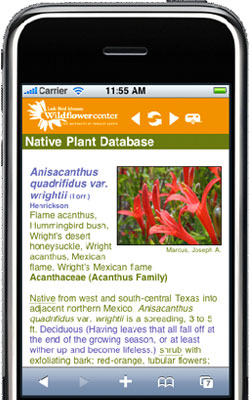
Did you know you can access the Native Plant Information Network with your web-enabled smartphone?

Ask Mr. Smarty Plants
Ask Mr. Smarty Plants is a free service provided by the staff and volunteers at the Lady Bird Johnson Wildflower Center.

rate this answer

Thursday - June 25, 2009
From: Austin, TX
Region: Southwest
Topic: Shade Tolerant
Title: Shade groundcover under Magnolia in Austin, Texas
Answered by: Jackie OKeefe
QUESTION:
I have a 50' Magnolia grandiflora casting full shade underneath with very shallow and some exposed roots. I have Horseherb (calyptocarpus vialis)in the area and have been encouraging it to spread under the Magnolia but so far it has not made much progress. In addition to the Horseherb are there any other native grasses or ground covers that will survive/thrive under this tree?ANSWER:
Your choice of Calyptocarpus vialis (straggler daisy) for groundcover in understory shade is a good one. It spreads both by root and seed and should gradually fill the area in. It is winter-dormant, so using it in combination with some other species helps fill the gaps, so to speak. We have several suggestions.
Achillea millefolium (common yarrow) – I've seen this plant do surprisingly well in fairly shady sites. It doesn't bloom, or doesn't bloom much, as shade deepens, but it provides winter greenery and an attractive texture. It spreads by root and seed. In hot, dry settings, extra summer water is appreciated, but in the shade it will likely pull through on its own, although it may become semi-dormant at this time.
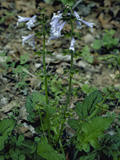
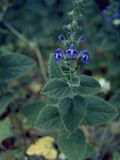
Salvia lyrata (lyreleaf sage) – This is one tough and adaptable little plant. It thrives in shade and survives pretty large doses of sun. It WILL spread, mainly by seed, but also by root division. The rosette remains green all winter. The distinctive marking on the leaf – shaped like a lyre! – is distinguishing. The plant also tolerates both wet and dry conditions. Flower color seems to vary with seasonal climatic variations, one year quite periwinkle blue, another year paler and less conspicuous. Deadheading the spent spikes may be desireable for appearance.
Scutellaria ovata ssp. bracteata (heartleaf skullcap) – Another evergreen herbaceous perennial, this plant spreads by seed, but even more by root. It can be somewhat summer-dormant. This plant does become 1 to 3 feet tall.
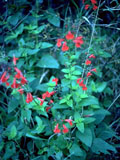
Salvia coccinea (blood sage) – Scarlet or Tropical Sage does okay in shade and would be a pretty accent to other plants. Regular and fairly drastic pruning will keep it dense and promote repeat flowering.
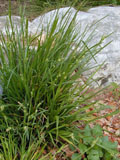
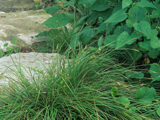
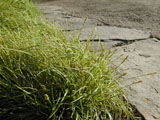
Carex blanda (eastern woodland sedge) – You are correct in speculating that there are sedges that can serve well as understory groundcover. This one is better adapted to shade than some other Texas natives, according to our Native Plants Database, but other possibilities are: Carex planostachys (cedar sedge),which is found under our local Juniperus ashei (Ashe's juniper), and Carex texensis (Texas sedge).
More Shade Tolerant Questions
Plants for border garden in shade in Austin
March 15, 2009 - Need suggestion for what to plant in a border garden. We live in northwest Austin and the garden is north-facing and shaded. Currently are oleanders but they don't get enough sun. Also growing are...
view the full question and answer
Magnolia species are allelopathic
August 02, 2014 - Have a healthy Southern Magnolia tree around 8 years old. It seems like everything I plant next to it dies.: Variegated Spirea, Stokes Aster, Hydrangeas. Is there something it secretes like the waln...
view the full question and answer
Small shrub for shady area
March 06, 2010 - I would like to find a shrub to plant on the north, northeast side of my house, but it will be in mostly shade. It needs to get between 21/2' to 4' tall. Do you have any suggestions please?
view the full question and answer
Need a recommendation for a fast growing shade tree near Gettysburg PA
October 08, 2009 - I am looking to plant a fast growing shade tree with non-invasive roots. I live in south central Pennsylvania just north of Gettysburg PA.
view the full question and answer
Michigan native plants for shady, low traffic area
May 10, 2006 - Hello, I am looking for a recommendation for a Michigan native groundcover. I live adjacent to the Rouge River watershed and want to buy the right thing. The location is shady, infrequently walked ...
view the full question and answer
| Support the Wildflower Center by Donating Online or Becoming a Member today. |