Native Plants
Q. Who is Mr. Smarty Plants?
A: There are those who suspect Wildflower Center volunteers are the culpable and capable culprits. Yet, others think staff members play some, albeit small, role. You can torture us with your plant questions, but we will never reveal the Green Guru's secret identity.
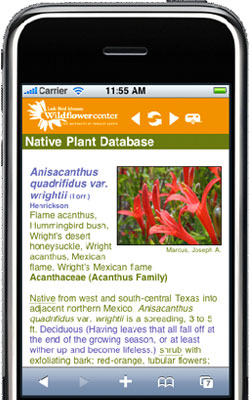
Did you know you can access the Native Plant Information Network with your web-enabled smartphone?

Ask Mr. Smarty Plants
Ask Mr. Smarty Plants is a free service provided by the staff and volunteers at the Lady Bird Johnson Wildflower Center.

rate this answer

Thursday - April 09, 2009
From: Austin, TX
Region: Southwest
Topic: Groundcovers
Title: Native plants for groundcover under Magnolia in Austin
Answered by: Barbara Medford
QUESTION:
What plants native to the Austin, Tx area will do well underneath a large magnolia tree (instead of the English ivy that is there)?ANSWER:
Unfortunately, we find ourselves talking more and more about allelopathy, as more is being learned about it. This is a process by which a tree, usually as it matures, emits substances from leaves, twigs or even roots that inhibit the growth of competing plants beneath that tree. Species of magnolia definitely are offenders in this respect. We would certainly recommend that you remove the non-native English ivy, for reasons laid out in this Plant Conservation Alliance Alien Plant Working Group site Least Wanted-Hedera helix, (English ivy). It is an invasive plant and can damage brickwork and kill trees if allowed to grow unchecked.
Besides the emission of toxic substances, the dense shade of Magnolia grandiflora (southern magnolia) can also prevent the flourishing of understory plants. However, we will suggest a few shade plants, a couple ferns and some grasses, that could hopefully overcome both disadvantages and give you an attractive native cover beneath the tree. The Lady Bird Johnson Wildflower Center recommends only plants native not to North America and to the area in which they are being grown; plants already acclimated to the climate, rainfall and temperatures will require less maintenance, water and fertilizer.
Plants for under a magnolia tree
Athyrium filix-femina (common ladyfern) - 2 to 3 ft. tall, part shade, shade
Calyptocarpus vialis (straggler daisy) - 6" to 1 ft. tall, sun, part shade, shade
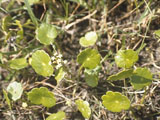
Hydrocotyle umbellata (manyflower marshpennywort) - 6" to 1 ft. tall, sun, part shade, shade
Onoclea sensibilis (sensitive fern) - to 3 ft. tall, part shade, shade
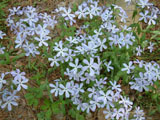
Phlox divaricata (wild blue phlox) - 8" to 18" tall, part shade, shade
Ruellia drummondiana (Drummond's wild petunia) - 1 to 3 ft. tall, part shade, shade
Viola lanceolata (bog white violet) - part shade, shade
Viola missouriensis (Missouri violet) - 6" to 1 ft. tall, part shade, shade
Grasses for under a magnolia tree
Bromus ciliatus (fringed brome) - sun, part shade, shade
Chasmanthium latifolium (Inland sea oats) - 2 to 4 ft. tall, part shade, shade
Muhlenbergia schreberi (nimblewill) - 1 to 2-1/2 ft. tall, part shade, shade
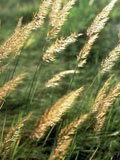
Sorghastrum nutans (Indiangrass) - 3 to 6 ft. tall, sun, part shade, shade



More Groundcovers Questions
Shade Tolerant Grasses and Groundcovers for Waco TX
March 15, 2013 - What is the best shade-tolerant grass?
What is the best shade-tolerant ground cover?
view the full question and answer
Ground cover for Plano, Texas
July 06, 2011 - Looking for perennial seeds, maximum height 6 inches.
Basically, a ground cover. Flowering would be nice but not #1 on list.
Medium to maximum sun. Don't have the best soil, but fertilizer, sprink...
view the full question and answer
Erosion controlling Groundcover for Phenix AL
March 30, 2014 - Hi I am trying to find a grass or ground cover to control erosion on firing range berms which are 1:1 grade on a firing range outside of Phenix City AL. Sandy clay soil, direct sunlight almost all day...
view the full question and answer
Plants to grow between flagstones in the Hudson River Valley of New York
May 08, 2012 - I live in newburgh, ny & have aquired some bluestone. I want to do a walkway but will need a low mowable ground cover to go between the stones (not enough bluestone to cover the area. I know I have ...
view the full question and answer
Plants to put between stepping stones in Virginia
June 07, 2009 - We are a public school in Northern Virginia and are looking for native plants that could be planted between heavily used stepping stones and could withstand some foot traffic (mostly in a sunny spot, ...
view the full question and answer
| Support the Wildflower Center by Donating Online or Becoming a Member today. |