Native Plants

Q. Who is Mr. Smarty Plants?
A: There are those who suspect Wildflower Center volunteers are the culpable and capable culprits. Yet, others think staff members play some, albeit small, role. You can torture us with your plant questions, but we will never reveal the Green Guru's secret identity.
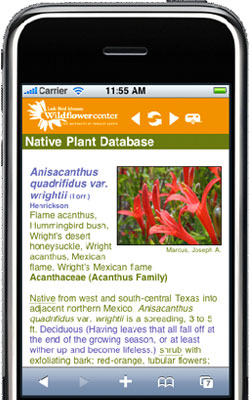
Did you know you can access the Native Plant Information Network with your web-enabled smartphone?

Ask Mr. Smarty Plants
Ask Mr. Smarty Plants is a free service provided by the staff and volunteers at the Lady Bird Johnson Wildflower Center.

rate this answer

Monday - March 28, 2005
From: Allentown, PA
Region: Northeast
Topic: Diseases and Disorders, Shrubs, Trees
Title: Smarty Plants on arborvitaes
Answered by: Joe Marcus
QUESTION:
Hello, I live in Allentown, PA and have a 7-foot arborvitae shrub in my backyard, planted in the corner of the yard where a wood fence intersects with the brick wall of the garage. I have had many plant species in that area so I assume that the soil is acceptably fertile. I softened the surrounding area where the hole was dug to ensure root penetration when I planted the shrub in Summer 2003 and the shrub gets significant water and has done well to this point. I have an identical arborvitae planted about 5 feet away. Recently I noticed that the leaves on back of the arborvitae that faces the wood fence/garage wall were all dried out and long dead. The front of the arborvitae seems perfectly fine, no discoloration, no loss of leaves; but the back is essentially bare after I finished pulling off all the dead leaves. While the identical species planted about 5 feet away does show small patches of dry dying leaves from time to time, overall it does fine. Any idea as to what this may be and how I can remedy it? Is this due to a lack of sunlight, a particular shrub disease, perhaps the cold winter? I've been told about 'nutrient spikes' that may help increase the nutrient intake. Are these recommended? It would be one thing if the entire shrub was drying out and dying, but its only a problem in the back of the shrub. Please help!ANSWER:
Thank you for writing! The condition you describe sounds like winter injury, although there could be other causes as well. Here's what I think probably happened. Because your arborvitae is right next to a brick wall the conditions in the foliage of your plant within a few inches of the wall can be quite different than the conditions on the other side of the plant. Brick walls act as heat sinks, that is, they store heat on sunny days and radiate the stored heat at night or when it gets cloudy. The net effect for your arborvitae is that the foliage next to the wall probably did not acclimate to the colder conditions at the beginning of winter and was susceptible to freezing injury on the first really cold night of winter. If that night followed a sunny day, the effect would be especially pronounced. Very cold, very sunny days can have dramatic affects on even cold-hardy plants. Water stress at that time would exacerbate the problem. It is always a good idea to water your plants before a hard freeze if it occurs after a period of little or no rain.
There are some diseases that affect arborvitaes. Here is a link to a Penn State website with a very good section on Arborvitae Diseases. If you suspect a disease or insect problem I recommend taking a limb that includes both the affected area and some living tissue to your county extension agent for diagnosis.
I would not recommend using "nutrient spikes". In fact, you should never feed a stressed or diseased plant. It sounds like you have rich soil. Adding some compost when the plant begins to show new growth should be all your plant ever needs.
More Shrubs Questions
Shrubs for area around underground storm shelter
May 27, 2013 - We want to plant shrubs around our underground storm shelter to divide it from our parking area. Obviously, this is to avoid having someone drive on top of the shelter. What native shrub to North GA ...
view the full question and answer
Beautyberry Dying Back
August 06, 2015 - I've got an American Beautyberry which I planted in the spring. It's now about 2-3 feet tall and has 3 trunks (or limbs). It's in an area which gets about 5 hours of direct sun per day and I've be...
view the full question and answer
Stress in potted Tif blueberry plants
August 15, 2008 - Recently purchased Tif Blue Blueberry plants (about 3 ft tall)are showing signs of stress. They are in 10 gallon pots. Should they be transplanted? Medium? Fertilizer? Location? Trimming?
view the full question and answer
Possibility of invasiveness of blackberry bush
March 27, 2008 - I bought a blackberry bush from Home Depot last year. My sister said if I planted it in the ground it would take over my lawn. So I put it in a big planter up against my fence, but I'd like to put it...
view the full question and answer
A method for killing nandina and ligustrum with herbicide
October 19, 2012 - Is there an effective herbicide that can be painted on the stumps of Nandina and Wax-leaf ligustrum to keep them from growing back?
Thanks so much!
view the full question and answer
| Support the Wildflower Center by Donating Online or Becoming a Member today. |